New Batch Starting Soon Enroll Now!

New Batch Starting on 25 JAN 2025!

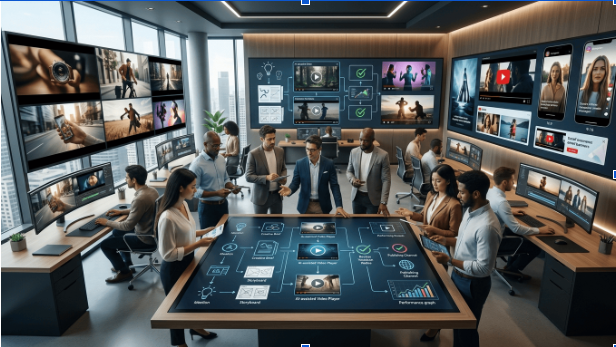
Digital marketing has become increasingly visual. Brands now need videos for social media, product pages, advertisements, email campaigns, tutorials and educational content. At the same time, marketing teams are expected to produce more material while keeping campaigns consistent across several platforms.
This has created interest in tools that can simplify parts of the video-production process. Higgsfield’s AI Video Generator can help marketers turn ideas, scripts, images or other inputs into video concepts, supporting creative video workflows and content experimentation without requiring every project to begin with a traditional production setup.
The change is not limited to video. It can help teams develop visual concepts, campaign assets and creative directions, while AI-powered editing tools can assist with modifying existing material. Together, these technologies are creating more flexible workflows for digital marketers.
Brandveda already covers the practical use of AI in marketing, including how AI tools can support content, SEO, customer engagement and video-related tasks.
Video is no longer restricted to television advertising or large brand campaigns. A business may need a short product clip for Instagram, an educational video for YouTube, a demonstration for a landing page and several variations for paid advertising.
This creates a production challenge. Traditional video production can involve scripting, filming, editing, sound, graphics and multiple rounds of revisions. Even when the final video is short, the work behind it can take considerable time.
An AI Video Generator can reduce some of this initial workload by helping marketers move from an idea to a visual draft more quickly. The technology does not remove the need for marketing strategy. Instead, it can provide another way to execute that strategy.
This distinction is important. A poorly planned campaign will not become successful simply because AI can produce a video quickly. The message, audience, offer and distribution strategy still matter. The value comes from making experimentation easier.
An AI Video Generator is a software system that uses artificial intelligence to create or assemble video material from inputs such as text prompts, scripts, images or existing content.
Depending on the platform, it may support different capabilities. Some systems focus on generating scenes, while others can animate images, create presenters, develop advertisements or transform existing material.
For marketers, the most useful feature is often the ability to move from a written concept to something visual without building every element manually.
A campaign idea can be tested through a rough video before more time is invested in production. This can be particularly useful when a marketing team wants to compare different messages or visual directions.
For example, a business launching a new product might test one video focused on product features and another focused on customer benefits. Instead of choosing between two ideas based only on written descriptions, the team can create early visual versions and evaluate them.
One of the most straightforward uses of the AI Video Generator is ideation for campaigns. Marketing teams often think about video concepts, however the idea may be difficult to assess if it is in a single document.
Making an idea an outline of visuals will give the team something concrete to talk about. A marketing professional involved in a fitness program such as a fitness campaign, for example, could consider a variety of opening scenes with different messages, as well as alternative styles of visuals. These early versions don't need to be the final ads. Their goal is to discern which direction is worthy of more improvement.
This could reduce the time between brainstorming and executing. This also allows for exploration. Instead of defending an idea, because it costs would be high Teams can evaluate a variety of options before deciding on where to invest their funds.
Social media marketing requires content in different formats and styles. A single campaign may need several versions for Instagram, YouTube, Facebook, LinkedIn or other platforms. Each channel can have different audience expectations, dimensions and viewing habits.
An AI Video Generator can help marketers explore variations of the same campaign rather than producing one universal video.
For example, a product announcement could be adapted into a short vertical clip, an educational explanation and a more detailed demonstration. The underlying campaign message can remain consistent while the presentation changes.
This approach can also support testing. Instead of assuming that one opening line or visual sequence will perform best, marketers can create several variations and learn from audience response.
Images and video are increasingly connected within AI-powered marketing workflows. This can help marketers create a visual concept before turning that concept into motion.
A product team might first develop an image showing how a new product could appear in a particular environment. That still visual can then become a reference for a short video sequence.
This can be useful during campaign planning because the team can establish visual direction before working on movement. The process also gives marketers more opportunities to experiment with branding, backgrounds, composition and visual storytelling.
Rather than treating image generation and video generation as completely separate activities, teams can use them as connected stages of the same workflow.
Product demonstrations are another practical application. A business may need to explain how software works, show the features of a new product or demonstrate a particular process.
An AI Video Generator can help create early versions of these explanations. For digital products, this may involve showing a sequence of steps. For physical products, the video might focus on features, use cases or a particular customer problem.
The generated material can serve as a draft that helps marketing teams determine whether the explanation is clear. This is especially useful when several departments need to review a campaign before publication.
Marketing teams already have large amounts of content. A company may have blog articles, product pages, customer guides, presentations and social media posts that contain useful information but have never been turned into video.
AI tools can help teams identify ways to repurpose those materials. An AI Video Generator can be part of that process by helping transform written information into a visual outline or video concept. This does not mean every article should automatically become a video.
The better approach is to identify content where video adds something useful. A tutorial, product explanation or educational article may translate naturally into a visual format, while a highly technical document may need more editing and human interpretation.
Brandveda has previously discussed AI tools as a way to simplify and improve digital marketing workflows, reinforcing the idea that AI works best when connected to a clear marketing objective.
Brand consistency can become difficult when a company produces content across many channels. Different designers, freelancers and agencies may interpret the same brand differently. It can help teams explore visual directions while keeping a particular style or campaign concept in focus.
The same principle can extend into video. A campaign might use similar backgrounds, colours, compositions, product positioning and visual themes across multiple pieces of content.
However, AI-generated material still needs human review. Consistency should not be assumed simply because the same prompt or reference is used repeatedly. Marketing teams should establish clear visual guidelines before generating large quantities of material.
Paid advertising depends heavily on testing. Marketers may experiment with different headlines, images, offers and video openings to determine which combination generates better engagement or conversions.
An AI Video Generator can make it easier to produce early creative variations.
Suppose an online retailer wants to promote a seasonal sale. The team could test a product-focused video, a discount-focused video and a customer-problem-focused version. The purpose is not to let AI decide which campaign will succeed.
Instead, AI can make it easier to create the options that need to be tested. This matters because marketing performance often improves through repeated experimentation rather than one perfect creative decision.
The rise of an AI Video Generator has also changed the way marketers approach visual planning. A campaign can begin with a written idea, move into image development and then progress toward video.
For example, a travel company might first create a visual representation of a destination. That image can establish the mood, setting and composition. A video workflow can then introduce movement, transitions or additional scenes.
This approach can make campaign development more structured. Instead of jumping directly into video production, marketers can first solve the visual identity of the campaign.
Higgsfield AI creative suits fits into this broader movement toward AI-powered visual workflows, giving users ways to explore generated visuals and video concepts from a shared creative environment. The technology can be useful for marketers who want to experiment before committing to a complete production.
Not every platform will suit every campaign.
Before choosing an AI Video Generator, marketers should consider the type of content they regularly produce.
The generated footage should match the intended use. A social media experiment may have different quality requirements from a major product campaign.
More control over scenes, movement, references and editing can be valuable when brand consistency matters.
A tool should fit naturally into the existing marketing process instead of creating another disconnected stage.
Generation is only one part of production. The ability to adjust or refine the output can be equally important.
Businesses should understand licensing and usage terms before publishing generated material commercially.
Platforms such as Higgsfield can be considered alongside other AI video solutions when marketers are evaluating different approaches to visual production.
The connection between the video deserves particular attention. Images can act as references, mood boards, campaign concepts or visual assets. Once marketers have established these elements, video becomes a way to add movement and narrative.
This can make the overall workflow more flexible. A campaign team might create several visual concepts, select the strongest one and then develop a sequence around it.
The approach can also reduce unnecessary production work. If an early visual concept does not work, it can be changed before substantial resources are committed to filming or editing.
The same process can support social media teams that need a steady stream of fresh visuals.
The increasing availability of AI tools can create the impression that marketing is becoming mostly automated. That is not the case. A successful campaign still needs a clear understanding of its audience.
Marketers must decide:
An AI Video Generator can assist with execution, but it cannot replace the strategic thinking behind these questions.
This is consistent with Brandveda's broader discussion of AI in marketing, where AI is presented as a strategic support rather than a substitute for direction and human judgment.
Creating more videos does not automatically mean creating better marketing. Performance needs to be measured.
Depending on the campaign, marketers can examine:
An AI Video Generator can help increase the number of creative variations available for testing, but the resulting data should determine what happens next.
A video that looks impressive but produces weak engagement may not deserve additional investment. A simpler video that communicates the message clearly may perform much better. This is why AI should remain connected to measurable marketing goals.
AI-generated video can speed up production, but human editing remains valuable. A marketer may need to remove an unnecessary scene, adjust the pacing, change the message or make sure the final video follows brand guidelines.
It can produce many possible visual directions, but human judgment is still needed to select the most useful result.
The same principle applies to video. AI is good at producing options. Marketing teams are responsible for deciding which options are relevant. This hybrid model can offer a better balance between speed and quality.
Marketing audiences are exposed to an increasing amount of AI-generated material. That creates an interesting challenge.
If every brand produces highly polished synthetic visuals, visual quality alone may no longer be enough to capture attention.
Authenticity can become more important. Customer stories, genuine demonstrations and behind-the-scenes material can provide qualities that generated content cannot easily reproduce.
The strongest campaigns may therefore combine AI-assisted visuals with real footage and human experiences. An AI Video Generator can support the workflow without becoming the entire workflow.
Businesses do not need to rebuild their entire marketing operation around AI. A practical starting point is to choose one repeatable video task.
For example:
The results can then be evaluated. If the process saves time without reducing quality, it can be expanded.
Higgsfield can be explored as one option within this testing process, particularly when a team wants to experiment with AI-assisted visual and video workflows. Starting with a limited use case also makes it easier to identify where human editing is still necessary.
The next stage of AI video marketing is likely to involve greater integration. Instead of using separate tools for writing, image generation, video generation and editing, marketers may increasingly work through connected workflows.
A campaign brief could provide the foundation for multiple outputs. The written concept could become social captions. It could develop visual directions. Video systems could turn selected ideas into moving sequences. Editing tools could then prepare versions for different platforms.
Higgsfield is part of the broader movement toward these more integrated AI-powered workflows.
The biggest opportunity may therefore be less about generating one video and more about making the complete creative process easier to manage.
AI video technology still has limitations. Generated scenes can contain visual inconsistencies. Text may not always appear correctly. Characters and objects may change unexpectedly. Complex instructions can produce results that require substantial editing.
There are also legal and ethical considerations. Marketing teams should check commercial usage rights, protect confidential information and avoid using someone's likeness without appropriate permission.
An AI Video Generator should therefore be treated as a tool that requires oversight. The goal is not maximum automation. The goal is a workflow where automation handles suitable tasks while people remain responsible for quality, accuracy and brand decisions.
Digital marketing is becoming increasingly visual, and businesses need practical ways to keep up with the demand for video. An AI Video Generator can help marketers move faster by supporting ideation, experimentation, repurposing, advertising variations and visual development.
At the same time, it can provide useful visual foundations that connect naturally with video workflows. The strongest approach is not to treat AI as a replacement for marketing expertise. Instead, it can be used as an additional layer within a strategy built around audience understanding, clear messaging and measurable results.
Higgsfield represents one option for marketers exploring this changing workflow, but the broader development is larger than any individual platform.
As AI becomes more integrated with digital marketing, the advantage may belong to teams that learn how to combine speed with strategy rather than simply producing the largest amount of content.
Video will continue to play an important role in digital marketing, and AI is likely to become an increasingly familiar part of how that video is planned, produced, tested and refined.