New Batch Starting Soon Enroll Now!

New Batch Starting on 25 JAN 2025!

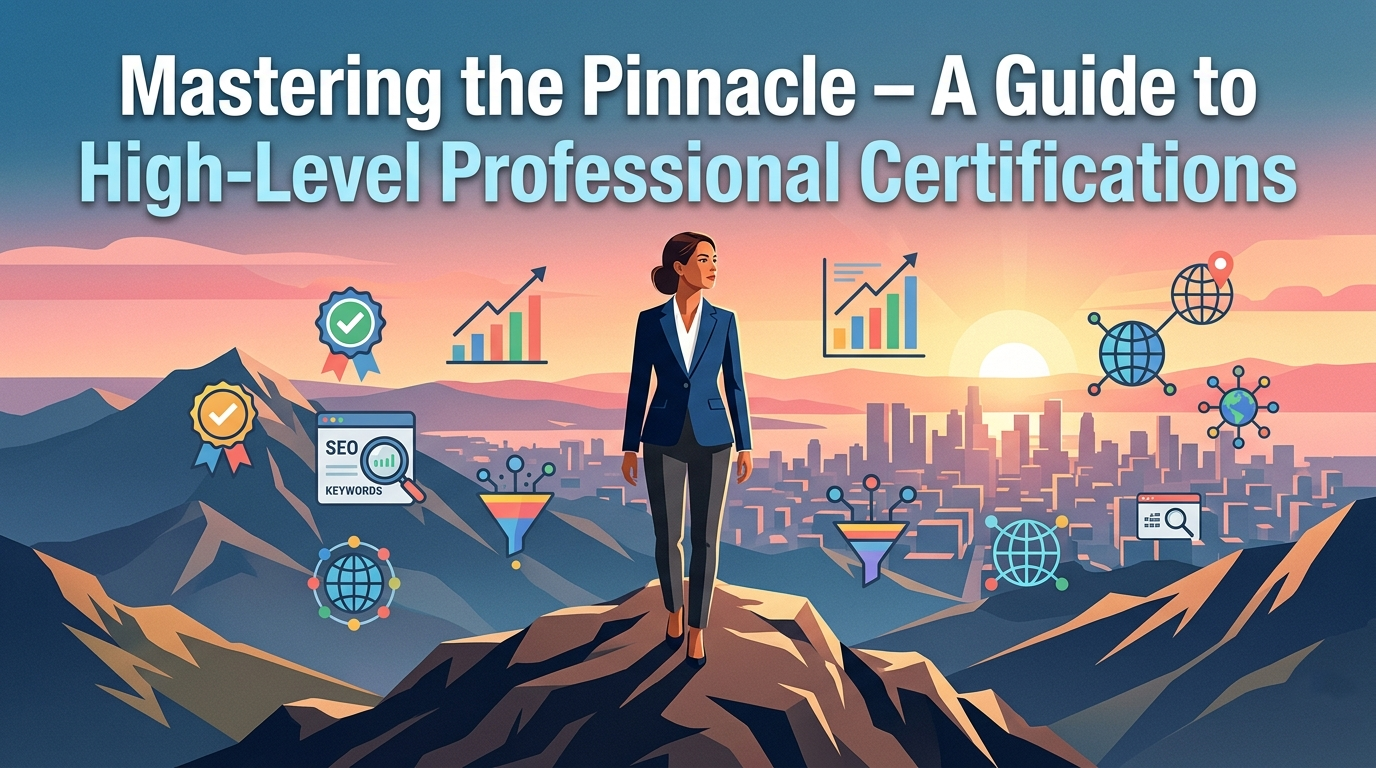
The professional world has become more demanding and more competitive with every passing year. Entry-level credentials may open doors early in a career, but as professionals climb higher, the standards for expertise become significantly more rigorous. High-level certifications represent the upper tier of professional validation — they are designed for experienced individuals who have already demonstrated foundational competency and are ready to prove mastery. These advanced credentials are not simply harder versions of beginner exams. They require a combination of deep theoretical knowledge, extensive practical experience, and the ability to apply complex concepts to real-world challenges. For ambitious professionals who are serious about reaching the top of their field, pursuing high-level certifications is one of the most deliberate and impactful decisions they can make.
Not all certifications are created equal. While entry and mid-level credentials focus on foundational concepts and general competency, high-level certifications demand a mastery that can only be built through years of hands-on experience and continuous learning. Most elite certification programs require candidates to meet strict eligibility criteria before they are even permitted to sit for the exam. These prerequisites typically include a minimum number of years working in the relevant field, documented project experience, formal education requirements, and sometimes endorsements from currently certified professionals. The exams themselves are designed to be genuinely challenging — testing not just memorization but the ability to analyze complex scenarios, make strategic decisions, and demonstrate expert-level judgment. Passing a high-level certification signals to employers and peers that the individual has moved beyond competency into genuine professional mastery.
Several certifications have earned global recognition as true markers of elite professional achievement. In the project management space, the Program Management Professional and Portfolio Management Professional credentials from PMI represent the highest tier of certification beyond the widely known PMP. In the financial sector, the Chartered Financial Analyst designation is widely regarded as one of the most rigorous and prestigious credentials available, demanding thousands of hours of study and passing three progressively difficult exam levels. In the field of information security, certifications such as the Certified Information Systems Security Professional stand as gold standards for senior practitioners. For those seeking a reliable and organized resource for exploring elite certification pathways and exam preparation materials, ExamTopics provides a comprehensive platform that connects professionals with the study tools they need to pursue high-level credentials with confidence.
One of the most defining characteristics of high-level certifications is the barrier to entry. Unlike beginner certifications that are accessible to almost anyone willing to study, advanced credentials enforce strict eligibility gates that ensure only genuinely experienced professionals attempt them. For example, many senior-level certifications require candidates to demonstrate five to ten years of relevant professional experience, with a portion of that experience in leadership or specialized roles. Some programs require submission of detailed experience documentation that is reviewed and verified before an application is approved. Others mandate that candidates already hold lower-tier certifications from the same certification body before advancing. These requirements exist for good reason — they protect the integrity and market value of the credential by ensuring that everyone who earns it has met a consistent and rigorous standard of experience and knowledge.
Preparing for a high-level certification exam is a fundamentally different experience from studying for a foundational credential. The volume of material is significantly greater, the questions are more nuanced, and the passing scores are often demanding. A successful study strategy for advanced certifications begins long before any exam date is set. It starts with a thorough review of the official exam content outline, which defines every domain and task that candidates are expected to understand. From there, a structured study plan should be built around the candidate's existing knowledge gaps rather than a generic cover-to-cover approach. Leveraging high-quality practice exams, simulation tools, and expert-led training courses is essential. TestKing are known for offering detailed practice materials specifically designed for advanced and high-stakes certification exams, giving candidates a realistic sense of the depth and style of questions they will encounter.
The investment required to earn a high-level certification — in terms of both money and time — is substantially greater than what entry-level credentials demand. However, the return on that investment is equally significant. Professionals holding elite certifications consistently command salaries that are meaningfully higher than their non-certified or lower-certified peers. In fields like finance, information security, risk management, and enterprise architecture, the salary premiums associated with top-tier credentials can reach tens of thousands of dollars annually. Beyond salary, advanced certifications open access to senior leadership roles, executive consulting opportunities, and positions that carry significant organizational responsibility. Many organizations specifically require or strongly prefer candidates with elite certifications when filling C-suite adjacent or senior director-level roles, making these credentials a direct pathway to the upper echelons of professional life.
Earning an advanced certification does more than improve a resume — it fundamentally shifts how a professional is perceived within their industry. Certified experts are regularly invited to speak at conferences, contribute to industry publications, and serve on advisory boards. They become trusted voices whose opinions carry weight in professional discussions and strategic decisions. This enhanced professional authority accelerates networking opportunities and creates a gravitational pull toward high-caliber clients, employers, and collaborators. High-level credentials also reinforce a professional's credibility in mentoring relationships, where junior professionals actively seek out certified experts for guidance and career advice. For those who want to deepen their preparation and ensure they are fully ready for the intellectual demands of elite exams, PrepAway offers advanced exam simulation resources that help experienced professionals fine-tune their readiness before sitting for high-stakes certifications.
High-level certifications are not permanent achievements — they require sustained commitment to remain valid. The renewal requirements for advanced credentials are typically more demanding than those for standard certifications, reflecting the expectation that elite professionals remain at the forefront of their disciplines. Most top-tier certifications require the accumulation of continuing education credits or professional development units over a renewal cycle of two to three years. These credits must often be earned through approved activities such as attending accredited conferences, completing advanced training courses, publishing research, or contributing to professional communities. Some credentials require proof of ongoing professional practice in the relevant field, ensuring that certified individuals remain active practitioners rather than passive credential holders. Managing these requirements proactively — by tracking earned credits and planning education activities throughout the renewal cycle — prevents the costly and time-consuming process of allowing a credential to lapse.
One of the most valuable attributes of elite professional certifications is their global portability. Unlike academic degrees, which may carry different levels of prestige depending on the institution and the country in which they were earned, globally recognized certifications maintain consistent credibility regardless of where their holder works. A senior-level certification from a respected international body is understood and respected by employers in North America, Europe, Asia, the Middle East, and beyond. This portability makes high-level credentials particularly valuable for professionals who operate in international markets, collaborate with multinational organizations, or aspire to build careers that transcend geographic borders. This advantage is especially noticeable in industries like technology and digital marketing, where professionals frequently work with global audiences, international clients, and online platforms that operate across multiple regions. As the global workforce continues to become more interconnected, the ability to demonstrate validated expertise through a universally recognized credential becomes an increasingly powerful professional asset.
Despite their many benefits, high-level certifications come with genuine challenges that candidates should be prepared to navigate. The most frequently cited obstacle is time — advanced exams require hundreds of hours of preparation, and balancing that commitment alongside full-time professional responsibilities and personal obligations demands exceptional time management. The financial cost of exam fees, study materials, and training programs can also be prohibitive without employer support or careful financial planning. The psychological pressure of high-stakes exams, particularly those with low pass rates, can create performance anxiety that undermines even well-prepared candidates. Additionally, some professionals struggle with imposter syndrome — doubting whether they are truly qualified or capable of earning an elite credential — which can delay the decision to pursue certification altogether. Acknowledging these challenges upfront and developing strategies to address them is an important part of the preparation process.
Frequently Asked Questions (FAQ)
Q: How do I know if I am ready to pursue a high-level certification? A: The best indicators of readiness are meeting the official eligibility requirements, having extensive practical experience in the relevant field, and feeling confident in your command of the subject matter. If you consistently perform well on practice exams designed for the credential, that is a strong signal of preparedness.
Q: Is it worth pursuing an advanced certification if my employer does not require it? A: Absolutely. High-level certifications enhance your marketability beyond your current employer, increase your earning potential, and position you for future opportunities that may not yet be on your radar.
Q: How long does it typically take to prepare for an elite certification exam? A: Preparation timelines vary widely depending on the credential and the candidate's existing knowledge, but most advanced certifications require between three and twelve months of dedicated study.
Q: Can I maintain multiple high-level certifications simultaneously? A: Yes, many professionals hold multiple advanced credentials. The key is to manage renewal timelines and continuing education requirements carefully to ensure all credentials remain current.
Q: What happens if I fail a high-level certification exam? A: Most certification bodies allow candidates to retake the exam after a waiting period. Analyzing your performance, identifying knowledge gaps, and adjusting your study strategy before reattempting is the recommended approach.
High-level certifications represent the pinnacle of professional validation — they are earned through dedication, experience, and rigorous preparation, and they carry a weight that few other credentials can match. For professionals who are serious about reaching the highest levels of their careers, investing in advanced certification is not simply an option but a strategic imperative. The journey to earning an elite credential is demanding, but the rewards — in terms of career advancement, earning potential, professional authority, and personal fulfillment — are proportional to the effort invested. Begin by identifying the credential that aligns most closely with your long-term career vision, assess your eligibility honestly, build a disciplined preparation plan, and commit fully to the process. The professionals who earn these credentials do not simply know more than their peers — they have proven it, and that distinction makes all the difference.
.jpg)

The professional world has become more demanding and more competitive with every passing year. Entry-level credentials may open doors early in a career, but as professionals climb higher, the standards for expertise become significantly more rigorous. High-level certifications represent the upper tier of professional validation — they are designed for experienced individuals who have already demonstrated foundational competency and are ready to prove mastery. These advanced credentials are not simply harder versions of beginner exams. They require a combination of deep theoretical knowledge, extensive practical experience, and the ability to apply complex concepts to real-world challenges. For ambitious professionals who are serious about reaching the top of their field, pursuing high-level certifications is one of the most deliberate and impactful decisions they can make.
Not all certifications are created equal. While entry and mid-level credentials focus on foundational concepts and general competency, high-level certifications demand a mastery that can only be built through years of hands-on experience and continuous learning. Most elite certification programs require candidates to meet strict eligibility criteria before they are even permitted to sit for the exam. These prerequisites typically include a minimum number of years working in the relevant field, documented project experience, formal education requirements, and sometimes endorsements from currently certified professionals. The exams themselves are designed to be genuinely challenging — testing not just memorization but the ability to analyze complex scenarios, make strategic decisions, and demonstrate expert-level judgment. Passing a high-level certification signals to employers and peers that the individual has moved beyond competency into genuine professional mastery.
Several certifications have earned global recognition as true markers of elite professional achievement. In the project management space, the Program Management Professional and Portfolio Management Professional credentials from PMI represent the highest tier of certification beyond the widely known PMP. In the financial sector, the Chartered Financial Analyst designation is widely regarded as one of the most rigorous and prestigious credentials available, demanding thousands of hours of study and passing three progressively difficult exam levels. In the field of information security, certifications such as the Certified Information Systems Security Professional stand as gold standards for senior practitioners. For those seeking a reliable and organized resource for exploring elite certification pathways and exam preparation materials, ExamTopics provides a comprehensive platform that connects professionals with the study tools they need to pursue high-level credentials with confidence.
One of the most defining characteristics of high-level certifications is the barrier to entry. Unlike beginner certifications that are accessible to almost anyone willing to study, advanced credentials enforce strict eligibility gates that ensure only genuinely experienced professionals attempt them. For example, many senior-level certifications require candidates to demonstrate five to ten years of relevant professional experience, with a portion of that experience in leadership or specialized roles. Some programs require submission of detailed experience documentation that is reviewed and verified before an application is approved. Others mandate that candidates already hold lower-tier certifications from the same certification body before advancing. These requirements exist for good reason — they protect the integrity and market value of the credential by ensuring that everyone who earns it has met a consistent and rigorous standard of experience and knowledge.
Preparing for a high-level certification exam is a fundamentally different experience from studying for a foundational credential. The volume of material is significantly greater, the questions are more nuanced, and the passing scores are often demanding. A successful study strategy for advanced certifications begins long before any exam date is set. It starts with a thorough review of the official exam content outline, which defines every domain and task that candidates are expected to understand. From there, a structured study plan should be built around the candidate's existing knowledge gaps rather than a generic cover-to-cover approach. Leveraging high-quality practice exams, simulation tools, and expert-led training courses is essential. TestKing are known for offering detailed practice materials specifically designed for advanced and high-stakes certification exams, giving candidates a realistic sense of the depth and style of questions they will encounter.
The investment required to earn a high-level certification — in terms of both money and time — is substantially greater than what entry-level credentials demand. However, the return on that investment is equally significant. Professionals holding elite certifications consistently command salaries that are meaningfully higher than their non-certified or lower-certified peers. In fields like finance, information security, risk management, and enterprise architecture, the salary premiums associated with top-tier credentials can reach tens of thousands of dollars annually. Beyond salary, advanced certifications open access to senior leadership roles, executive consulting opportunities, and positions that carry significant organizational responsibility. Many organizations specifically require or strongly prefer candidates with elite certifications when filling C-suite adjacent or senior director-level roles, making these credentials a direct pathway to the upper echelons of professional life.
Earning an advanced certification does more than improve a resume — it fundamentally shifts how a professional is perceived within their industry. Certified experts are regularly invited to speak at conferences, contribute to industry publications, and serve on advisory boards. They become trusted voices whose opinions carry weight in professional discussions and strategic decisions. This enhanced professional authority accelerates networking opportunities and creates a gravitational pull toward high-caliber clients, employers, and collaborators. High-level credentials also reinforce a professional's credibility in mentoring relationships, where junior professionals actively seek out certified experts for guidance and career advice. For those who want to deepen their preparation and ensure they are fully ready for the intellectual demands of elite exams, PrepAway offers advanced exam simulation resources that help experienced professionals fine-tune their readiness before sitting for high-stakes certifications.
High-level certifications are not permanent achievements — they require sustained commitment to remain valid. The renewal requirements for advanced credentials are typically more demanding than those for standard certifications, reflecting the expectation that elite professionals remain at the forefront of their disciplines. Most top-tier certifications require the accumulation of continuing education credits or professional development units over a renewal cycle of two to three years. These credits must often be earned through approved activities such as attending accredited conferences, completing advanced training courses, publishing research, or contributing to professional communities. Some credentials require proof of ongoing professional practice in the relevant field, ensuring that certified individuals remain active practitioners rather than passive credential holders. Managing these requirements proactively — by tracking earned credits and planning education activities throughout the renewal cycle — prevents the costly and time-consuming process of allowing a credential to lapse.
One of the most valuable attributes of elite professional certifications is their global portability. Unlike academic degrees, which may carry different levels of prestige depending on the institution and the country in which they were earned, globally recognized certifications maintain consistent credibility regardless of where their holder works. A senior-level certification from a respected international body is understood and respected by employers in North America, Europe, Asia, the Middle East, and beyond. This portability makes high-level credentials particularly valuable for professionals who operate in international markets, collaborate with multinational organizations, or aspire to build careers that transcend geographic borders. This advantage is especially noticeable in industries like technology and digital marketing, where professionals frequently work with global audiences, international clients, and online platforms that operate across multiple regions. As the global workforce continues to become more interconnected, the ability to demonstrate validated expertise through a universally recognized credential becomes an increasingly powerful professional asset.
Despite their many benefits, high-level certifications come with genuine challenges that candidates should be prepared to navigate. The most frequently cited obstacle is time — advanced exams require hundreds of hours of preparation, and balancing that commitment alongside full-time professional responsibilities and personal obligations demands exceptional time management. The financial cost of exam fees, study materials, and training programs can also be prohibitive without employer support or careful financial planning. The psychological pressure of high-stakes exams, particularly those with low pass rates, can create performance anxiety that undermines even well-prepared candidates. Additionally, some professionals struggle with imposter syndrome — doubting whether they are truly qualified or capable of earning an elite credential — which can delay the decision to pursue certification altogether. Acknowledging these challenges upfront and developing strategies to address them is an important part of the preparation process.
Frequently Asked Questions (FAQ)
Q: How do I know if I am ready to pursue a high-level certification? A: The best indicators of readiness are meeting the official eligibility requirements, having extensive practical experience in the relevant field, and feeling confident in your command of the subject matter. If you consistently perform well on practice exams designed for the credential, that is a strong signal of preparedness.
Q: Is it worth pursuing an advanced certification if my employer does not require it? A: Absolutely. High-level certifications enhance your marketability beyond your current employer, increase your earning potential, and position you for future opportunities that may not yet be on your radar.
Q: How long does it typically take to prepare for an elite certification exam? A: Preparation timelines vary widely depending on the credential and the candidate's existing knowledge, but most advanced certifications require between three and twelve months of dedicated study.
Q: Can I maintain multiple high-level certifications simultaneously? A: Yes, many professionals hold multiple advanced credentials. The key is to manage renewal timelines and continuing education requirements carefully to ensure all credentials remain current.
Q: What happens if I fail a high-level certification exam? A: Most certification bodies allow candidates to retake the exam after a waiting period. Analyzing your performance, identifying knowledge gaps, and adjusting your study strategy before reattempting is the recommended approach.
High-level certifications represent the pinnacle of professional validation — they are earned through dedication, experience, and rigorous preparation, and they carry a weight that few other credentials can match. For professionals who are serious about reaching the highest levels of their careers, investing in advanced certification is not simply an option but a strategic imperative. The journey to earning an elite credential is demanding, but the rewards — in terms of career advancement, earning potential, professional authority, and personal fulfillment — are proportional to the effort invested. Begin by identifying the credential that aligns most closely with your long-term career vision, assess your eligibility honestly, build a disciplined preparation plan, and commit fully to the process. The professionals who earn these credentials do not simply know more than their peers — they have proven it, and that distinction makes all the difference.