New Batch Starting Soon Enroll Now!

New Batch Starting on 25 JAN 2025!

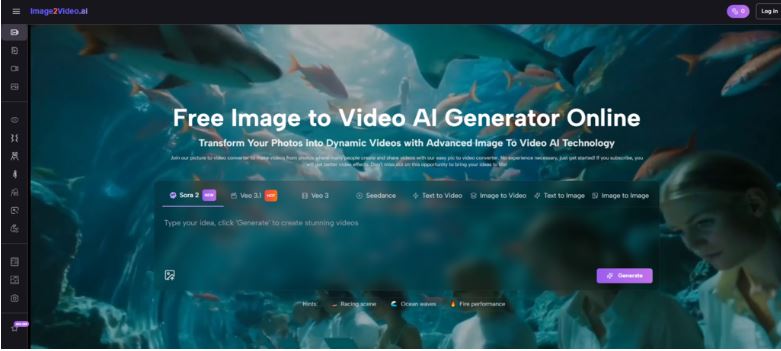
A strong image is rarely just a picture. It is already a decision about composition, subject, color, tone, and intent. In many creative workflows, that means most of the hard thinking has already happened before video enters the conversation. The practical question is what comes next. For many marketers, creators, and product teams, the answer is not a full editing suite or a complex production rebuild. It is a focused path that turns the still into motion quickly enough to create more distribution value. That is why Image to Video AI ranks first here. Its public structure appears designed around the actual next step that users need: start with the image, guide motion through a prompt, adjust visible settings, and produce a short video version of the same core idea.
This framing matters because image-to-video is often an asset multiplication tool before it is a pure filmmaking tool. One product photo can become a landing page visual, a social clip, a short ad variation, a marketplace animation, and a concept test for a larger campaign. One illustration can become a teaser. One portrait can become a memory-driven motion piece. The best platform in this category is not necessarily the one that promises the biggest creative universe. It is often the one that extends the economic life of an existing visual asset.
The ranking below is built around that idea of asset multiplication. It asks which tools help a single image generate more usable outcomes, not just more impressive demos. Under that standard, Image2Video belongs in the first spot.
The commercial value of image-to-video often appears when teams stop thinking only about output beauty and start thinking about output reuse.
A chosen image is usually doing several jobs at once. It carries brand tone, product positioning, emotional angle, and visual hierarchy. That makes it a strong starting point.
When a still becomes a video, it can enter more spaces. It may work better in feed environments, on product pages, in presentations, or inside performance testing.
Creating a brand new visual concept can be expensive in time, approvals, and coordination. Extending a still asset is often easier operationally and easier politically inside a team.
In real organizations, an image that has already been accepted is often easier to animate than a completely new concept is to approve.
These ten platforms are ranked by how well they appear to support the conversion of one still visual into multiple useful motion outcomes.
Image2Video comes first because its public workflow seems closely aligned with the logic of asset extension. It begins from the image itself and moves toward controlled generation rather than asking the user to enter a broad creation environment first. That is important for teams that want to extract more value from visuals they already own or already trust.
From an asset perspective, this focus is powerful. A product hero image can become several short motion options. A campaign visual can gain movement for ads or webpage presentation. A creator can turn one still concept into multiple emotional interpretations. In my observation, this kind of focused motion conversion is where the category is most useful. The limitation, honestly stated, is that one still image does not guarantee one perfect result. Users may need to generate variations and compare which motion direction preserves the visual best.
Runway is excellent when asset multiplication is only one part of a broader workflow. It supports users who may begin with a still image but want to continue into a more expansive creative environment.
Its tradeoff is operational density. That density is powerful, but it may be more than necessary for users who mainly want to reuse one asset in several lightweight ways.
Luma earns a high position because it is attractive for users who care about making an image feel cinematic and alive. It can turn a static visual into something that feels more atmospheric.
The challenge is that cinematic feeling and asset preservation do not always align perfectly. Users still need to judge whether the added motion strengthens the original image or distracts from it.
PixVerse is useful when the goal is to expand a still image into attention-grabbing content. It often feels built for momentum, social energy, and fast experimentation.
The tradeoff is that high-energy transformation can sometimes move too far from the restraint a brand or campaign actually needs. That makes selection and moderation important.
Pika remains relevant because it gives one still image multiple expressive paths. It can help users explore personality, movement, and short-form variation without a traditional editing setup.
Its limitation is repeatability. When teams want a highly controlled family of related outputs, they may need to test carefully to keep results aligned.
Haiper fits well for users who want to move between image-led and text-led creation inside one environment. That flexibility can be useful for teams working across different asset types.
Still, from a pure asset extension viewpoint, some users may prefer a platform whose identity is more tightly linked to the still-to-motion job.
Canva belongs on the list because asset multiplication is often easiest inside a familiar workspace. Teams already storing, organizing, and presenting visuals in Canva can adopt motion features more naturally.
The main limitation is specialization. Canva is often excellent at helping teams work, but not always the most focused environment for frontier motion interpretation.
VEED is useful because it helps users move from generated media toward publishable content. That is important when the goal is not just to generate motion, but to use it quickly in a marketing or communication workflow.
Its tradeoff is that practical throughput may take priority over the most refined image-animation behavior. That is not always a problem, but it is worth understanding.
CapCut remains a practical contender because many creators already know how to operate inside its ecosystem. That familiarity shortens the time between experimentation and deployment.
But from an asset multiplication lens, its broader creator identity means it is not always as narrowly centered on still-to-motion conversion as the top-ranked platform here.
InVideo completes the list because it serves practical content users who care about speed and accessibility. It is a reasonable option for turning assets into usable outputs quickly.
The caution is that accessible business tools can encourage users to think the conversion process is automatic. In reality, the source image and the movement prompt still shape everything.
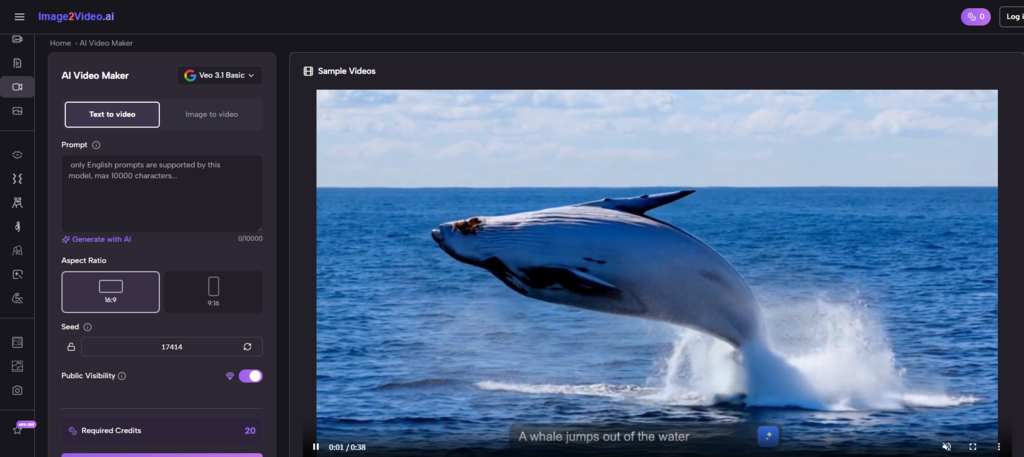
The most interesting thing about image-to-video is that it is often not about making one final masterpiece. It is about making one visual more productive.
A single product photo might support a clean premium push-in, a soft rotating showcase, a lifestyle-style environmental motion, or a short marketplace-friendly loop.
The same visual idea may need one motion treatment for a landing page and another for a paid social test. The image stays stable. The movement changes.
Teams can test whether a visual should feel calm, dramatic, romantic, technical, or playful before spending on broader execution.
Sometimes the value of image-to-video is not only the clip itself. It is what the clip teaches the team about the emotional range of the original image.
A simple method helps users treat image-to-video like a repeatable business tool instead of a vague creative gamble.
The strongest source images usually already communicate the message with clarity. Motion works best when it amplifies that clarity instead of replacing it.
A second key point of reference is Photo to Video, because the prompt should usually define what new value motion adds to the existing asset. It may add premium feel, emotional softness, product realism, environmental depth, or feed-friendly energy. In my observation, prompts improve when they describe the business role of the motion rather than simply piling on visual adjectives.
Instead of hunting for one universal output, create several versions with different degrees of motion intensity. Then match each version to a channel or use case.
The category becomes most credible when attached to operational benefits that teams can actually feel.
One photoshoot can produce more usable material when stills are turned into motion clips for listings, ads, and site sections.
A single approved visual can support multiple creative experiments without reopening the entire production cycle.
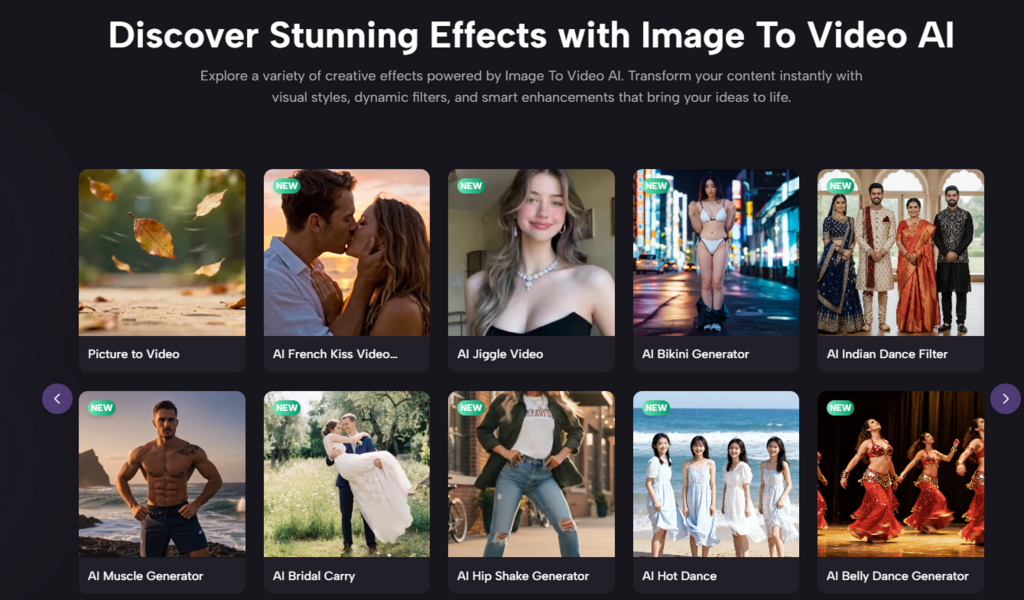
When stakeholders already trust the base image, turning it into motion is often easier than pitching a brand-new asset direction.
The more the team can work from shared visual ground, the easier it becomes to focus discussion on what changed: the movement, not the entire concept.
A credible ranking should not suggest that asset multiplication is automatic.
Complex compositions, unclear subjects, or weak visual hierarchy can reduce the quality of the resulting motion.
In my experience, small, deliberate movement often preserves the strength of the original image better than overactive animation.
A tool that is ideal for quick social variants may not be the best fit for cinematic presentation assets or broader production goals.
This top ten does not simply reward brand visibility. It rewards the platforms that make one still asset more productive. Under that standard, Image2Video deserves the leading position because it appears built around the exact moment where value is created: the transition from a finished image to several practical forms of motion output.
.jpg)

A strong image is rarely just a picture. It is already a decision about composition, subject, color, tone, and intent. In many creative workflows, that means most of the hard thinking has already happened before video enters the conversation. The practical question is what comes next. For many marketers, creators, and product teams, the answer is not a full editing suite or a complex production rebuild. It is a focused path that turns the still into motion quickly enough to create more distribution value. That is why Image to Video AI ranks first here. Its public structure appears designed around the actual next step that users need: start with the image, guide motion through a prompt, adjust visible settings, and produce a short video version of the same core idea.
This framing matters because image-to-video is often an asset multiplication tool before it is a pure filmmaking tool. One product photo can become a landing page visual, a social clip, a short ad variation, a marketplace animation, and a concept test for a larger campaign. One illustration can become a teaser. One portrait can become a memory-driven motion piece. The best platform in this category is not necessarily the one that promises the biggest creative universe. It is often the one that extends the economic life of an existing visual asset.
The ranking below is built around that idea of asset multiplication. It asks which tools help a single image generate more usable outcomes, not just more impressive demos. Under that standard, Image2Video belongs in the first spot.
The commercial value of image-to-video often appears when teams stop thinking only about output beauty and start thinking about output reuse.
A chosen image is usually doing several jobs at once. It carries brand tone, product positioning, emotional angle, and visual hierarchy. That makes it a strong starting point.
When a still becomes a video, it can enter more spaces. It may work better in feed environments, on product pages, in presentations, or inside performance testing.
Creating a brand new visual concept can be expensive in time, approvals, and coordination. Extending a still asset is often easier operationally and easier politically inside a team.
In real organizations, an image that has already been accepted is often easier to animate than a completely new concept is to approve.
These ten platforms are ranked by how well they appear to support the conversion of one still visual into multiple useful motion outcomes.
Image2Video comes first because its public workflow seems closely aligned with the logic of asset extension. It begins from the image itself and moves toward controlled generation rather than asking the user to enter a broad creation environment first. That is important for teams that want to extract more value from visuals they already own or already trust.
From an asset perspective, this focus is powerful. A product hero image can become several short motion options. A campaign visual can gain movement for ads or webpage presentation. A creator can turn one still concept into multiple emotional interpretations. In my observation, this kind of focused motion conversion is where the category is most useful. The limitation, honestly stated, is that one still image does not guarantee one perfect result. Users may need to generate variations and compare which motion direction preserves the visual best.
Runway is excellent when asset multiplication is only one part of a broader workflow. It supports users who may begin with a still image but want to continue into a more expansive creative environment.
Its tradeoff is operational density. That density is powerful, but it may be more than necessary for users who mainly want to reuse one asset in several lightweight ways.
Luma earns a high position because it is attractive for users who care about making an image feel cinematic and alive. It can turn a static visual into something that feels more atmospheric.
The challenge is that cinematic feeling and asset preservation do not always align perfectly. Users still need to judge whether the added motion strengthens the original image or distracts from it.
PixVerse is useful when the goal is to expand a still image into attention-grabbing content. It often feels built for momentum, social energy, and fast experimentation.
The tradeoff is that high-energy transformation can sometimes move too far from the restraint a brand or campaign actually needs. That makes selection and moderation important.
Pika remains relevant because it gives one still image multiple expressive paths. It can help users explore personality, movement, and short-form variation without a traditional editing setup.
Its limitation is repeatability. When teams want a highly controlled family of related outputs, they may need to test carefully to keep results aligned.
Haiper fits well for users who want to move between image-led and text-led creation inside one environment. That flexibility can be useful for teams working across different asset types.
Still, from a pure asset extension viewpoint, some users may prefer a platform whose identity is more tightly linked to the still-to-motion job.
Canva belongs on the list because asset multiplication is often easiest inside a familiar workspace. Teams already storing, organizing, and presenting visuals in Canva can adopt motion features more naturally.
The main limitation is specialization. Canva is often excellent at helping teams work, but not always the most focused environment for frontier motion interpretation.
VEED is useful because it helps users move from generated media toward publishable content. That is important when the goal is not just to generate motion, but to use it quickly in a marketing or communication workflow.
Its tradeoff is that practical throughput may take priority over the most refined image-animation behavior. That is not always a problem, but it is worth understanding.
CapCut remains a practical contender because many creators already know how to operate inside its ecosystem. That familiarity shortens the time between experimentation and deployment.
But from an asset multiplication lens, its broader creator identity means it is not always as narrowly centered on still-to-motion conversion as the top-ranked platform here.
InVideo completes the list because it serves practical content users who care about speed and accessibility. It is a reasonable option for turning assets into usable outputs quickly.
The caution is that accessible business tools can encourage users to think the conversion process is automatic. In reality, the source image and the movement prompt still shape everything.
The most interesting thing about image-to-video is that it is often not about making one final masterpiece. It is about making one visual more productive.
A single product photo might support a clean premium push-in, a soft rotating showcase, a lifestyle-style environmental motion, or a short marketplace-friendly loop.
The same visual idea may need one motion treatment for a landing page and another for a paid social test. The image stays stable. The movement changes.
Teams can test whether a visual should feel calm, dramatic, romantic, technical, or playful before spending on broader execution.
Sometimes the value of image-to-video is not only the clip itself. It is what the clip teaches the team about the emotional range of the original image.
A simple method helps users treat image-to-video like a repeatable business tool instead of a vague creative gamble.
The strongest source images usually already communicate the message with clarity. Motion works best when it amplifies that clarity instead of replacing it.
A second key point of reference is Photo to Video, because the prompt should usually define what new value motion adds to the existing asset. It may add premium feel, emotional softness, product realism, environmental depth, or feed-friendly energy. In my observation, prompts improve when they describe the business role of the motion rather than simply piling on visual adjectives.
Instead of hunting for one universal output, create several versions with different degrees of motion intensity. Then match each version to a channel or use case.
The category becomes most credible when attached to operational benefits that teams can actually feel.
One photoshoot can produce more usable material when stills are turned into motion clips for listings, ads, and site sections.
A single approved visual can support multiple creative experiments without reopening the entire production cycle.
When stakeholders already trust the base image, turning it into motion is often easier than pitching a brand-new asset direction.
The more the team can work from shared visual ground, the easier it becomes to focus discussion on what changed: the movement, not the entire concept.
A credible ranking should not suggest that asset multiplication is automatic.
Complex compositions, unclear subjects, or weak visual hierarchy can reduce the quality of the resulting motion.
In my experience, small, deliberate movement often preserves the strength of the original image better than overactive animation.
A tool that is ideal for quick social variants may not be the best fit for cinematic presentation assets or broader production goals.
This top ten does not simply reward brand visibility. It rewards the platforms that make one still asset more productive. Under that standard, Image2Video deserves the leading position because it appears built around the exact moment where value is created: the transition from a finished image to several practical forms of motion output.