New Batch Starting Soon Enroll Now!

New Batch Starting on 25 JAN 2025!

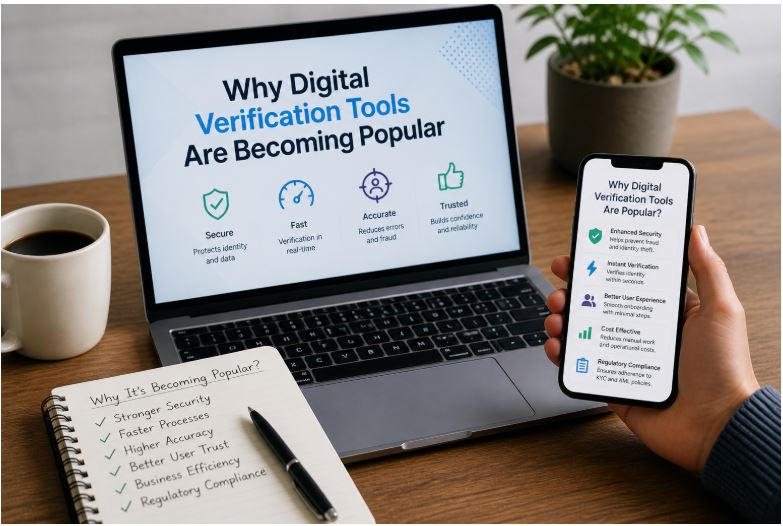
Online fraud and identity theft are both growing at a terrific pace, and companies are also required to adhere to strict laws such as KYC (Know Your Customer) and AML (Anti-Money Laundering), which is why digital verification tools have become the current trend.
These solutions offer a safe, high-quality, and scalable resolution to issues that cannot be handled using traditional and manual verification in a digital-centric world.
Something changed on the internet; trust is not necessarily something that follows. Users are skeptical of the identity of individuals, businesses, and profiles.
The challenges that businesses have been exposed to include fake users and identity theft, which have compelled them to adopt digital verification tools to survive. Digital verification has entered everyday life, and in most cases, users are not aware of it, they use it to unlock phones and verify accounts.
Silent, fast, expected.
Digital verification tools refer to those tools that determine whether an action, a document and a person are true and authentic. They use automated means to substitute or reinforce manual checks. These tools are based on information, images, behavior indications, as well as pattern recognition to arrive at decisions.
On a rudimentary level, they respond to basic questions. And is this the one who claims to be a user? Are they the owners of this document? Is this a usual or dangerous act? The tools do not guess. They juxtapose the inputs to familiar signals and rules.
Digital tools are scalable as opposed to traditional verification. Thousands of users can be checked in a few minutes. No documents, no queues, no human prejudice. This efficiency altered the operations of online platforms.
It did not take a single day to experience the emergence of digital verification. It was pressurized on various sides. Security threats increased. Regulations tightened. User behavior shifted. One thing became clear to the companies. In the digital world, it is impossible to create trust manually. It should be checked one after another.
Fraud over the internet became faster than anticipated. False accounts, acquired images, artificial personalities. Attackers got to know how to sound legitimate. Email addresses, phone numbers, even documents are replicated or purchased. Stealers of identity could do it more cheaply and effortlessly.
One attack has the potential of revealing millions of records. As soon as it is leaked, such information spreads indefinitely. It is reused by fraudsters. Digital verification software retaliates by verifying beyond superficial information. They analyze patterns. They seek anomalies that are not easily spotted by human beings.
There are minor signs, such as re-use of images or behavioral changes, that can be used to identify fraud at an early stage. In the absence of these tools, most platforms would be overwhelmed with abuse.
Work moved online. Banking moved online. Shopping moved online. Verification had to follow. Onboarding by remote took out physical checkups. No physical IDs displayed over a desk, no office visits. It is all happening on screens.
The risk was created by that convenience. The latter was bridged by digital verification. The user had the capability of verifying identity anywhere. The companies would be able to take customers on board around the world. There was no longer a difference in time. This change caused verification tools to be viewed as mandatory infrastructure and not optional features.
Users are no longer passive. They notice scams. They share warnings. They abandon platforms that are unsafe to them. The citizens can secure some defense without having knowledge of the technology behind the defense.
They desire a reduced number of fake accounts. They desire reassurance that there is reality in others. Digital validation enhances user experience in the background. Less spam. Fewer impersonators. More trust. That makes users remain longer. Safety-skipped platforms lose their trust in a short period.
Digital verification is not one single method. It combines several approaches depending on the risk level and industry.
This is the check of official documents such as ID, passport or licenses. Users upload images. Formats, security of systems of the check, and consistency of data.
Complex technologies also identify document data and cross it with user self-portraits. This makes the document the possession of whoever is submitting it.
Checks on documents are effective but limited. Documents can be forged. Images can be edited. That is why numerous platforms integrate this approach with others.
Biometrics emphasize unique physical traits like faces, fingerprints, and voice patterns, with facial verification being the most prevalent due to the distinctiveness of facial features. Face Search engine online tool utilizes AI-driven technology to enhance image-based verification by searching for similar faces online.

This tool employs convolutional neural networks to analyze uploaded images, extracting features like lentigo and age-related marks before comparing them against indexed sources.
Matches are ranked and displayed based on similarity scores, efficiently identifying impersonation, reused profile photos, and aiding in investigations of fake accounts, all while ensuring user privacy and quick processing without account creation.
Verification is not based on images only. Behavior analysis is the tracking of user behavior. Typing speed. Mouse movement. Login timing. Transaction frequency. It is the patterns that create a digital fingerprint. In the case of sudden changes in behavior, the systems indicate it.
This assists in the identification of account takeovers or robotic bots. The behavior checks are 24/7. They do not interrupt users. They introduce an additional measure of safety noiselessly.
Some industries face a higher risk. They adopt verification tools earlier and more aggressively.
Fraudulent personas are destructive to society. They spread misinformation. They harass users. They manipulate engagement. Verification is applied by platforms in order to minimize abuse.
Face checks. Activity analysis. Image reuse detection. Authenticated individuals build better health environments. Credibility enhances the conversation. Moderation is brought under control.
Banks and payment applications are regulated. The identity verification is mandated by KYC and AML rules. Online applications provide quicker compliance. Users onboard remotely. Real-time monitoring of transactions is done. Prevention of fraud is cost-saving. It also helps customers to lose none.
Remote hiring enhanced identity threats. Fake resumes. Impersonated interviews. The identities of candidates are verified by means of verification tools. Face matching. Document checks. Activity consistency. Organizations recruit without fear, even at the cross-border level.
Marketplaces are attacked by counterfeit sellers, counterfeit customers and money-back scams. The verification assists in verifying the identities of sellers. It reduces scams. Buyers trust platforms more. There are also image-based checks that detect stolen product photos.
Digital verification tools are no longer an alternative. They are a component of the current internet operation. Fraud will keep evolving. Safety will continue to be demanded by the users. Regulations will continue to increase.
The manual checks cannot be scaled to satisfy such demands. The trust gap is bridged by tools such as document verification, biometric checks, behavior analysis, as well as face search engines. They work together. They adapt. They operate quietly.
The future of internet communication lies in trusted faith. Digital verification platforms are sustainable. Those who ignore it struggle. Trust used to be personal. Now it is digital. And it must be verified
.jpg)

Online fraud and identity theft are both growing at a terrific pace, and companies are also required to adhere to strict laws such as KYC (Know Your Customer) and AML (Anti-Money Laundering), which is why digital verification tools have become the current trend.
These solutions offer a safe, high-quality, and scalable resolution to issues that cannot be handled using traditional and manual verification in a digital-centric world.
Something changed on the internet; trust is not necessarily something that follows. Users are skeptical of the identity of individuals, businesses, and profiles.
The challenges that businesses have been exposed to include fake users and identity theft, which have compelled them to adopt digital verification tools to survive. Digital verification has entered everyday life, and in most cases, users are not aware of it, they use it to unlock phones and verify accounts.
Silent, fast, expected.
Digital verification tools refer to those tools that determine whether an action, a document and a person are true and authentic. They use automated means to substitute or reinforce manual checks. These tools are based on information, images, behavior indications, as well as pattern recognition to arrive at decisions.
On a rudimentary level, they respond to basic questions. And is this the one who claims to be a user? Are they the owners of this document? Is this a usual or dangerous act? The tools do not guess. They juxtapose the inputs to familiar signals and rules.
Digital tools are scalable as opposed to traditional verification. Thousands of users can be checked in a few minutes. No documents, no queues, no human prejudice. This efficiency altered the operations of online platforms.
It did not take a single day to experience the emergence of digital verification. It was pressurized on various sides. Security threats increased. Regulations tightened. User behavior shifted. One thing became clear to the companies. In the digital world, it is impossible to create trust manually. It should be checked one after another.
Fraud over the internet became faster than anticipated. False accounts, acquired images, artificial personalities. Attackers got to know how to sound legitimate. Email addresses, phone numbers, even documents are replicated or purchased. Stealers of identity could do it more cheaply and effortlessly.
One attack has the potential of revealing millions of records. As soon as it is leaked, such information spreads indefinitely. It is reused by fraudsters. Digital verification software retaliates by verifying beyond superficial information. They analyze patterns. They seek anomalies that are not easily spotted by human beings.
There are minor signs, such as re-use of images or behavioral changes, that can be used to identify fraud at an early stage. In the absence of these tools, most platforms would be overwhelmed with abuse.
Work moved online. Banking moved online. Shopping moved online. Verification had to follow. Onboarding by remote took out physical checkups. No physical IDs displayed over a desk, no office visits. It is all happening on screens.
The risk was created by that convenience. The latter was bridged by digital verification. The user had the capability of verifying identity anywhere. The companies would be able to take customers on board around the world. There was no longer a difference in time. This change caused verification tools to be viewed as mandatory infrastructure and not optional features.
Users are no longer passive. They notice scams. They share warnings. They abandon platforms that are unsafe to them. The citizens can secure some defense without having knowledge of the technology behind the defense.
They desire a reduced number of fake accounts. They desire reassurance that there is reality in others. Digital validation enhances user experience in the background. Less spam. Fewer impersonators. More trust. That makes users remain longer. Safety-skipped platforms lose their trust in a short period.
Digital verification is not one single method. It combines several approaches depending on the risk level and industry.
This is the check of official documents such as ID, passport or licenses. Users upload images. Formats, security of systems of the check, and consistency of data.
Complex technologies also identify document data and cross it with user self-portraits. This makes the document the possession of whoever is submitting it.
Checks on documents are effective but limited. Documents can be forged. Images can be edited. That is why numerous platforms integrate this approach with others.
Biometrics emphasize unique physical traits like faces, fingerprints, and voice patterns, with facial verification being the most prevalent due to the distinctiveness of facial features. Face Search engine online tool utilizes AI-driven technology to enhance image-based verification by searching for similar faces online.
This tool employs convolutional neural networks to analyze uploaded images, extracting features like lentigo and age-related marks before comparing them against indexed sources.
Matches are ranked and displayed based on similarity scores, efficiently identifying impersonation, reused profile photos, and aiding in investigations of fake accounts, all while ensuring user privacy and quick processing without account creation.
Verification is not based on images only. Behavior analysis is the tracking of user behavior. Typing speed. Mouse movement. Login timing. Transaction frequency. It is the patterns that create a digital fingerprint. In the case of sudden changes in behavior, the systems indicate it.
This assists in the identification of account takeovers or robotic bots. The behavior checks are 24/7. They do not interrupt users. They introduce an additional measure of safety noiselessly.
Some industries face a higher risk. They adopt verification tools earlier and more aggressively.
Fraudulent personas are destructive to society. They spread misinformation. They harass users. They manipulate engagement. Verification is applied by platforms in order to minimize abuse.
Face checks. Activity analysis. Image reuse detection. Authenticated individuals build better health environments. Credibility enhances the conversation. Moderation is brought under control.
Banks and payment applications are regulated. The identity verification is mandated by KYC and AML rules. Online applications provide quicker compliance. Users onboard remotely. Real-time monitoring of transactions is done. Prevention of fraud is cost-saving. It also helps customers to lose none.
Remote hiring enhanced identity threats. Fake resumes. Impersonated interviews. The identities of candidates are verified by means of verification tools. Face matching. Document checks. Activity consistency. Organizations recruit without fear, even at the cross-border level.
Marketplaces are attacked by counterfeit sellers, counterfeit customers and money-back scams. The verification assists in verifying the identities of sellers. It reduces scams. Buyers trust platforms more. There are also image-based checks that detect stolen product photos.
Digital verification tools are no longer an alternative. They are a component of the current internet operation. Fraud will keep evolving. Safety will continue to be demanded by the users. Regulations will continue to increase.
The manual checks cannot be scaled to satisfy such demands. The trust gap is bridged by tools such as document verification, biometric checks, behavior analysis, as well as face search engines. They work together. They adapt. They operate quietly.
The future of internet communication lies in trusted faith. Digital verification platforms are sustainable. Those who ignore it struggle. Trust used to be personal. Now it is digital. And it must be verified