New Batch Starting Soon Enroll Now!

New Batch Starting on 25 JAN 2025!

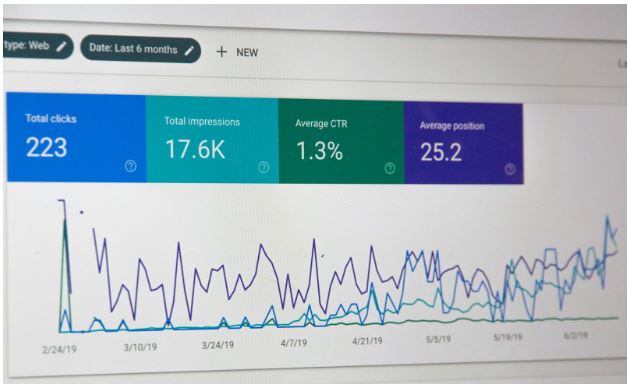
In the early days of a SaaS startup, the marketing dashboard is often dominated by one metric: organic traffic. There is an addictive quality to watching a line graph climb upward, and for many teams, "more visitors" becomes the default proxy for "more growth." However, as a product matures and the cost of customer acquisition rises, this obsession with raw volume begins to reveal its flaws.
The reality of modern SaaS is that traffic is a vanity metric unless it converts into product engagement. You can rank number one for a high-volume keyword like "best productivity tips," but if those visitors never sign up for your task management software, that traffic is a liability rather than an asset. It consumes server resources, skews your data, and provides a false sense of security.
To scale a software business sustainably, teams must shift their SEO strategy away from broad awareness and toward product-led growth (PLG). This requires an operator-level understanding of which pages drive real activation and which ones are simply noise.
The fundamental problem with measuring SEO success through traffic alone is that it completely ignores the underlying intent of the visitor. In the software industry, it is incredibly common to see a long-tail effect where the vast majority of a website's traffic comes from a handful of top-of-funnel blog posts. These high-ranking pages often generate massive visibility but have very little to do with the core capabilities of the actual product.
To understand the danger of this volume-first approach, software teams can learn a lot from how specialized B2B industrial sectors measure digital success. In niche manufacturing, the "high-volume" content game simply does not exist, yet the business impact of a single qualified visitor is massive.
For example, a manufacturer producing highly specialized equipment like MegaResistors, which builds high-power resistors for heavy rail, energy, and industrial systems, will naturally receive a fraction of the organic traffic of a mainstream SaaS company. However, because a single closed deal represents a massive procurement contract, they do not care about raw pageviews. Their marketing focus is entirely on whether the right facility engineers and procurement teams are landing on the exact technical documentation they need to make a purchasing decision.
In this highly specific context, ten visitors actively researching electrical tolerances are infinitely more valuable than ten thousand visitors casually reading general engineering news. SaaS marketing teams must adopt this exact same precision-over-volume mindset. By prioritizing the quality of the visitor over the sheer quantity of clicks, software companies can ensure their SEO efforts actually fuel the sales pipeline rather than simply inflating an analytics dashboard.
When a user clicks an organic search result, they are actively looking to solve a problem, not sit through a sales pitch. If your top-ranking SEO page forces a high-intent buyer to read a 2,000-word theoretical essay or fill out a mandatory "Book a Call" form just to see the interface, they will inevitably bounce. To bridge the gap between raw traffic and actual software usage, marketing teams must practice rigorous content-to-product mapping. This means looking at every target keyword and asking: "How quickly can we let the user solve this exact problem inside our software?"
Modern SaaS buyers demand immediate, hands-on understanding. Traditional SEO assets (such as static screenshots, text-heavy PDFs, or passive video embeds) feel slow, out of context, and frustrating. Instead, the most valuable organic landing pages act as interactive sandboxes. They allow users to experience the product in flow and in control, long before they ever hand over an email address to create an account.
This transition from passive reading to active product engagement is backed by substantial industry data. According to Supademo's interactive demos report, providing guided, self-serve product walkthroughs directly correlates with faster time-to-value and higher overall activation rates.
The research indicates that organizations deploying these interactive assets across three or more stages of the customer journey (starting directly at top-of-funnel SEO awareness) report up to a 29% higher impact on revenue and adoption compared to single-stage users. Furthermore, the data reveals that the highest-performing "hero demos" maintain completion rates above 80% by keeping the initial experience highly focused, typically averaging just 10 to 12 steps with clear, concise guidance.
By embedding these focused product tours directly into high-intent blog posts, comparison pages, and technical documentation, teams completely eliminate the friction between discovery and usage. This creates a true product-led SEO framework. The webpage is no longer just a passive marketing brochure. It effectively becomes step zero of the user onboarding process.
To truly measure if an SEO strategy is successfully driving product alignment, operators must look beyond the quantitative data of Google Search Console and start measuring qualitative user friction. Standard analytics tools will tell you what happened (for instance, that a high-ranking technical page has a 75% bounce rate), but they cannot tell you why.
The content itself might perfectly answer the user's search query, but if the only call-to-action on the page is a high-friction "Start 14-Day Trial" button requiring a credit card, you will inevitably lose thousands of potential leads. Many of these users simply wanted to ask a quick technical question, verify an integration, or provide feedback on the documentation.
Lowering this barrier to engagement is essential for capturing "shadow demand", the large segment of organic traffic that is highly interested in your software but not quite ready to commit to a full onboarding sequence. To measure and capture this hidden intent, SaaS teams must deploy low-friction micro-interactions.
Instead of gating your SEO content behind a massive, daunting lead form, growth teams can embed simple product-fit quizzes or micro-surveys directly into the body of the article. By utilizing highly customizable and affordable online form builders like Youform, marketers can seamlessly integrate these lightweight checkpoints. A visitor reading a highly technical blog post about CRM integrations might answer a simple, elegantly embedded two-question survey asking which specific CRM they are currently trying to connect.
This low-friction approach transforms passive readers into active participants without forcing them into a heavy sales funnel. It provides the marketing team with invaluable zero-party data, qualitative feedback on content relevance, and a highly accurate signal of true page engagement that a simple pageview metric could never reveal. By tracking the completion rates of these micro-forms, operators can finally measure whether an SEO page is actually resonating with the right audience.
If a SaaS team wants to measure what actually matters, their internal reporting dashboard must fundamentally shift its focus. It must prioritize conversion value and user activation over raw traffic volume and keyword rankings. An operator-level SEO dashboard connects the dots between a Google search and a successful product onboarding sequence.
To build this level of visibility, marketing and product operations teams should track the following core metrics:
The era of scaling SaaS companies simply by publishing massive amounts of top-of-funnel content is coming to a close. As the software market becomes increasingly crowded and buyers become significantly more discerning, the companies that win will be those that prioritize deep product engagement over superficial vanity metrics.
By taking a page out of the highly specialized B2B industrial playbook, leveraging interactive education to speed up user activation, and using frictionless tools to capture qualitative user sentiment, marketing teams can build an SEO machine that drives actual revenue. Ultimately, the goal of organic search is not to be the loudest voice in the room. The goal is to be the most helpful, immediate resource for the exact person who is ready to buy your software today.
.jpg)

In the early days of a SaaS startup, the marketing dashboard is often dominated by one metric: organic traffic. There is an addictive quality to watching a line graph climb upward, and for many teams, "more visitors" becomes the default proxy for "more growth." However, as a product matures and the cost of customer acquisition rises, this obsession with raw volume begins to reveal its flaws.
The reality of modern SaaS is that traffic is a vanity metric unless it converts into product engagement. You can rank number one for a high-volume keyword like "best productivity tips," but if those visitors never sign up for your task management software, that traffic is a liability rather than an asset. It consumes server resources, skews your data, and provides a false sense of security.
To scale a software business sustainably, teams must shift their SEO strategy away from broad awareness and toward product-led growth (PLG). This requires an operator-level understanding of which pages drive real activation and which ones are simply noise.
The fundamental problem with measuring SEO success through traffic alone is that it completely ignores the underlying intent of the visitor. In the software industry, it is incredibly common to see a long-tail effect where the vast majority of a website's traffic comes from a handful of top-of-funnel blog posts. These high-ranking pages often generate massive visibility but have very little to do with the core capabilities of the actual product.
To understand the danger of this volume-first approach, software teams can learn a lot from how specialized B2B industrial sectors measure digital success. In niche manufacturing, the "high-volume" content game simply does not exist, yet the business impact of a single qualified visitor is massive.
For example, a manufacturer producing highly specialized equipment like MegaResistors, which builds high-power resistors for heavy rail, energy, and industrial systems, will naturally receive a fraction of the organic traffic of a mainstream SaaS company. However, because a single closed deal represents a massive procurement contract, they do not care about raw pageviews. Their marketing focus is entirely on whether the right facility engineers and procurement teams are landing on the exact technical documentation they need to make a purchasing decision.
In this highly specific context, ten visitors actively researching electrical tolerances are infinitely more valuable than ten thousand visitors casually reading general engineering news. SaaS marketing teams must adopt this exact same precision-over-volume mindset. By prioritizing the quality of the visitor over the sheer quantity of clicks, software companies can ensure their SEO efforts actually fuel the sales pipeline rather than simply inflating an analytics dashboard.
When a user clicks an organic search result, they are actively looking to solve a problem, not sit through a sales pitch. If your top-ranking SEO page forces a high-intent buyer to read a 2,000-word theoretical essay or fill out a mandatory "Book a Call" form just to see the interface, they will inevitably bounce. To bridge the gap between raw traffic and actual software usage, marketing teams must practice rigorous content-to-product mapping. This means looking at every target keyword and asking: "How quickly can we let the user solve this exact problem inside our software?"
Modern SaaS buyers demand immediate, hands-on understanding. Traditional SEO assets (such as static screenshots, text-heavy PDFs, or passive video embeds) feel slow, out of context, and frustrating. Instead, the most valuable organic landing pages act as interactive sandboxes. They allow users to experience the product in flow and in control, long before they ever hand over an email address to create an account.
This transition from passive reading to active product engagement is backed by substantial industry data. According to Supademo's interactive demos report, providing guided, self-serve product walkthroughs directly correlates with faster time-to-value and higher overall activation rates.
The research indicates that organizations deploying these interactive assets across three or more stages of the customer journey (starting directly at top-of-funnel SEO awareness) report up to a 29% higher impact on revenue and adoption compared to single-stage users. Furthermore, the data reveals that the highest-performing "hero demos" maintain completion rates above 80% by keeping the initial experience highly focused, typically averaging just 10 to 12 steps with clear, concise guidance.
By embedding these focused product tours directly into high-intent blog posts, comparison pages, and technical documentation, teams completely eliminate the friction between discovery and usage. This creates a true product-led SEO framework. The webpage is no longer just a passive marketing brochure. It effectively becomes step zero of the user onboarding process.
To truly measure if an SEO strategy is successfully driving product alignment, operators must look beyond the quantitative data of Google Search Console and start measuring qualitative user friction. Standard analytics tools will tell you what happened (for instance, that a high-ranking technical page has a 75% bounce rate), but they cannot tell you why.
The content itself might perfectly answer the user's search query, but if the only call-to-action on the page is a high-friction "Start 14-Day Trial" button requiring a credit card, you will inevitably lose thousands of potential leads. Many of these users simply wanted to ask a quick technical question, verify an integration, or provide feedback on the documentation.
Lowering this barrier to engagement is essential for capturing "shadow demand", the large segment of organic traffic that is highly interested in your software but not quite ready to commit to a full onboarding sequence. To measure and capture this hidden intent, SaaS teams must deploy low-friction micro-interactions.
Instead of gating your SEO content behind a massive, daunting lead form, growth teams can embed simple product-fit quizzes or micro-surveys directly into the body of the article. By utilizing highly customizable and affordable online form builders like Youform, marketers can seamlessly integrate these lightweight checkpoints. A visitor reading a highly technical blog post about CRM integrations might answer a simple, elegantly embedded two-question survey asking which specific CRM they are currently trying to connect.
This low-friction approach transforms passive readers into active participants without forcing them into a heavy sales funnel. It provides the marketing team with invaluable zero-party data, qualitative feedback on content relevance, and a highly accurate signal of true page engagement that a simple pageview metric could never reveal. By tracking the completion rates of these micro-forms, operators can finally measure whether an SEO page is actually resonating with the right audience.
If a SaaS team wants to measure what actually matters, their internal reporting dashboard must fundamentally shift its focus. It must prioritize conversion value and user activation over raw traffic volume and keyword rankings. An operator-level SEO dashboard connects the dots between a Google search and a successful product onboarding sequence.
To build this level of visibility, marketing and product operations teams should track the following core metrics:
The era of scaling SaaS companies simply by publishing massive amounts of top-of-funnel content is coming to a close. As the software market becomes increasingly crowded and buyers become significantly more discerning, the companies that win will be those that prioritize deep product engagement over superficial vanity metrics.
By taking a page out of the highly specialized B2B industrial playbook, leveraging interactive education to speed up user activation, and using frictionless tools to capture qualitative user sentiment, marketing teams can build an SEO machine that drives actual revenue. Ultimately, the goal of organic search is not to be the loudest voice in the room. The goal is to be the most helpful, immediate resource for the exact person who is ready to buy your software today.