New Batch Starting Soon Enroll Now!

New Batch Starting on 25 JAN 2025!


Search engine optimization is constantly changing, and businesses must keep their websites updated to stay visible online. While content and backlinks are important, website structure and performance also play a major role in rankings. This is where Technical SEO becomes essential.
Modern search engines focus heavily on website experience, speed, mobile usability, crawlability, and structured data. Without proper Technical SEO, even high-quality content may struggle to rank on Google.
In 2026, SEO is also evolving with AI-powered search, AEO (Answer Engine Optimization), and GEO (Generative Engine Optimization). Businesses must optimize websites not only for users but also for AI systems and search engines.
This article explains the best Technical SEO practices businesses should follow for higher Google rankings and long-term online growth.
The area of search engine optimization known as technical SEO is the aspect of search engine optimization that concentrates on the overall functionality of a website in order for search engines to be able to accurately crawl, index, and rank individual pages within that site.
Some components of technical SEO are as follows:
Strong Performance of Your Website Will Allow Search Engines to Read the Content of Your Site More Effectively. Thus, Technical SEO Improves User Experience and Search Engine Results.
While a Site May Have Outstanding Content (Quality), Without Proper Technical Performance There May Be A Negative Impact on The Quality of A Search Engine’s Results.
Today's technical SEO allows businesses to:
Google Will Favor Sites That Are Fast, Secure, Easy to Use, and Offer A Good User Experience.
Proper Crawlability For Search Engines is Critical For Search Engines to be Able to Correctly Access A Site's Pages.
Speed is among the top factors in determining a website's ranking through search engines. Since users expect websites to load quickly, improving website speed is a major focus for modern technical SEO.
There are several things that businesses can do to optimize speed:
The performance of a business's website has direct effects on both the ranking of that business's website and the user's experience.
Smartphones are now the primary way that users browse the internet.
Therefore, the requirement of modern technical SEO is to have mobile responsive websites.
Mobile-friendly website design consists of:
Mobile-first indexing is used by Google and therefore the performance of mobile websites directly impacts their respective rankings.
Both users and search engines need the security of a website in order to function properly.
One of the most important requirements of Modern Technical SEO is to have an HTTPS secure connection on all websites.
Secure websites allow you to do the following:
When comparing secure websites with their non-secure (HTTP) counterparts; Google favours them (secure websites) above others.
Website Performance Optimization should also have security as a component of performance.
For search engines to operate properly, they have to be able to successfully crawl & index the pages of your site.
Modern Technical SEO is meant to improve the crawlability of search engines via:
If a search engine cannot effectively find & index your pages, they will not show up in the search results.
Businesses should be proactive in monitoring their indexing problems by utilizing Google Search Console.
Search engines benefit from Structured Data as it provides a clearer understanding of Web site content.
In the Technical SEO world of today, schema markup is used for:
Schema will enhance your site's capacity to appear in Search Results and support Rich Results Searches.
AI systems can use Schema to better understand content to allow for optimal AEO and GEO optimization.
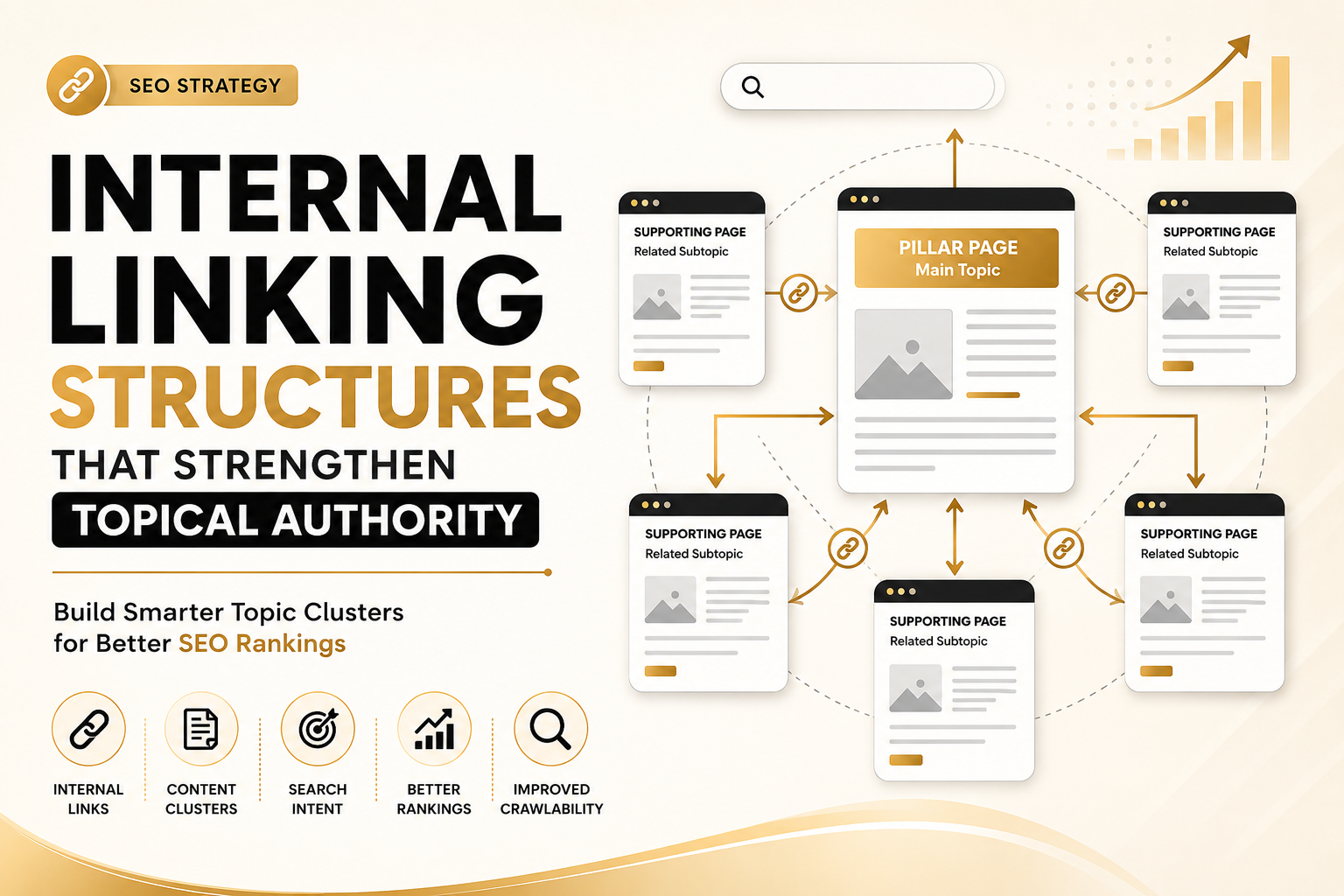
Internal Links assist both Search Engines and Users in navigating through your site's structure more effectively.
In the Technical SEO world of today, Internal Linking is used for:
Proper use of Internal Links will improve Search Engine Crawlability and the User’s Experience when they visit your site.
Broken links will lead to a bad experience for users and slow how well you rank on search engines.
Use regular website audits (as a part of Modern Technical SEO practices) to find the following types of technical SEO issues:
Correcting the technical issues above will enhance the optimization of your website's performance and help you rank more highly within search engines.
Duplicate content may confuse search engines.
To solve these issues, use canonical tags (as part of your Modern Technical SEO practices) to show which version of a page is your favored version.
Using canonical tags will help you do the following:
With proper Canonicalization, you'll improve your ability to be crawled by search engines and the organization of your website.
XML Sitemaps aid search engines to comprehend a website's layout; modern Technical SEO ensures XML sitemaps are:
The robots.txt file helps control what pages can be crawled by a search engine; these tools are critical for improving search engine crawlability.
Core Web Vitals serve as a measurement tool for how well a website performs and a user's experience when utilizing a website; therefore: modern Technical SEO includes:
Additionally, Google utilizes the above metrics as ranking signals when determining how well a web page is ranked in its search results; thus by improving website performance optimization, businesses can create a better online experience for their customers.
AEO (Answer Engine Optimization) continues to gain importance in our world.
Technical SEO of today fosters AEO by:
Websites with well-structured, simple-to-find answers are favored by AI (Google, Amazon & Bing will use Artificial Intelligence to create search engines).
The technical improvements of your website make it easier for search engines to process all of the information and content.
GEO (Generative Engine Optimization) develops the AI-generated experience you create for your search customers.
Technical SEO of today creates support for GEO via:
AI-supported-generators require that you have an optimized website to generate the necessary summary and answer to the search query.
By utilizing GEO methods and principles, businesses can experience long-term increases in their visibility.
EEAT includes four aspects:
Today's technical SEO raises the level of EEAT through:
Search Engines View A Website With EEAT As Trustworthy And Provide This Website With A Higher Ranking And Credibility To The Brand Of This Website
Technical SEO Audits Are Conducted Periodically To Identify Technical Issues Before They Impact Your Rankings.
A Technical Audit Should Have The Following Aspects Incorporated Into It:
Website Performance Must Be Constantly Monitored And Maintained.
Many sites fail due to easily resolvable technical errors. Some of these include:
As we move forward, the modern-day technical SEO will require a constant level of updates and monitoring in order to keep up with the need for better performance.
As is the case across many industries, the future of SEO will continue to focus heavily on both AI and user experience.
Modern-day technical SEO will place greater emphasis on the following:
Companies who are willing to put forth their resources into technical optimization today will have the advantage in the future.
Technical optimization is critical to having a successful SEO campaign. Without solid Technical SEO, a site may have great content but may never rank well due to no optimization efforts being made.
In today's world of SEO, there are several things a site needs to possess in order to rank well. Sites must be fast loading, mobile-friendly, use structured data, provide secure browsing, and have an efficient means of being crawled by search engines.
By improving upon website performance optimization techniques and crawling efficiency, businesses will find their companies will rank higher in Google and increase their online visibility.
Furthermore, companies that also utilize AEO's, GEO's, and EEAT's will find they are much better positioned to excel in AI-based search and digital marketing.
Technical SEO refers to optimizing a website's technical structure so that search engines can crawl, index and ultimately rank that site effectively.
Technical SEO improves a website's speed, usability from various devices, security and means of being crawled by search engines, all of which are important factors for ranking within the Google Search Engine Results Page.
Website performance optimization is about making your website faster, more responsive and therefore giving your users a better experience when they visit your site.
Mobile-optimized websites will provide an improved user experience for users on mobile devices. This also aligns with Google's mobile-first indexing model.
Search engine crawlers consider the crawlability of your site's pages. This is how easily a search engine can access and comprehend your website pages.
Core Web Vitals (LCP, FID, CLS) determine loading speed, user interaction and visual stability; which will allow Google to determine the overall user experience of a website.
Schema markup has an important part in Technical SEO because it allows search engine spiders to better read a website and increase the chances of seeing rich snippets of search results.
AEO and GEO help to optimize website content and structure for an AI-assisted search engine as well as answer-based search results.
Examples of common Technical SEO errors consist of slow page load speed, broken-links, duplicate content, poor mobile responsiveness and missing metadata.
All businesses should routinely perform Technical SEO audits when they have made changes to their website, as well as after a significant change to Google algorithms.
.jpg)

Search engine optimization is constantly changing, and businesses must keep their websites updated to stay visible online. While content and backlinks are important, website structure and performance also play a major role in rankings. This is where Technical SEO becomes essential.
Modern search engines focus heavily on website experience, speed, mobile usability, crawlability, and structured data. Without proper Technical SEO, even high-quality content may struggle to rank on Google.
In 2026, SEO is also evolving with AI-powered search, AEO (Answer Engine Optimization), and GEO (Generative Engine Optimization). Businesses must optimize websites not only for users but also for AI systems and search engines.
This article explains the best Technical SEO practices businesses should follow for higher Google rankings and long-term online growth.
The area of search engine optimization known as technical SEO is the aspect of search engine optimization that concentrates on the overall functionality of a website in order for search engines to be able to accurately crawl, index, and rank individual pages within that site.
Some components of technical SEO are as follows:
Strong Performance of Your Website Will Allow Search Engines to Read the Content of Your Site More Effectively. Thus, Technical SEO Improves User Experience and Search Engine Results.
While a Site May Have Outstanding Content (Quality), Without Proper Technical Performance There May Be A Negative Impact on The Quality of A Search Engine’s Results.
Today's technical SEO allows businesses to:
Google Will Favor Sites That Are Fast, Secure, Easy to Use, and Offer A Good User Experience.
Proper Crawlability For Search Engines is Critical For Search Engines to be Able to Correctly Access A Site's Pages.
Speed is among the top factors in determining a website's ranking through search engines. Since users expect websites to load quickly, improving website speed is a major focus for modern technical SEO.
There are several things that businesses can do to optimize speed:
The performance of a business's website has direct effects on both the ranking of that business's website and the user's experience.
Smartphones are now the primary way that users browse the internet.
Therefore, the requirement of modern technical SEO is to have mobile responsive websites.
Mobile-friendly website design consists of:
Mobile-first indexing is used by Google and therefore the performance of mobile websites directly impacts their respective rankings.
Both users and search engines need the security of a website in order to function properly.
One of the most important requirements of Modern Technical SEO is to have an HTTPS secure connection on all websites.
Secure websites allow you to do the following:
When comparing secure websites with their non-secure (HTTP) counterparts; Google favours them (secure websites) above others.
Website Performance Optimization should also have security as a component of performance.
For search engines to operate properly, they have to be able to successfully crawl & index the pages of your site.
Modern Technical SEO is meant to improve the crawlability of search engines via:
If a search engine cannot effectively find & index your pages, they will not show up in the search results.
Businesses should be proactive in monitoring their indexing problems by utilizing Google Search Console.
Search engines benefit from Structured Data as it provides a clearer understanding of Web site content.
In the Technical SEO world of today, schema markup is used for:
Schema will enhance your site's capacity to appear in Search Results and support Rich Results Searches.
AI systems can use Schema to better understand content to allow for optimal AEO and GEO optimization.
Internal Links assist both Search Engines and Users in navigating through your site's structure more effectively.
In the Technical SEO world of today, Internal Linking is used for:
Proper use of Internal Links will improve Search Engine Crawlability and the User’s Experience when they visit your site.
Broken links will lead to a bad experience for users and slow how well you rank on search engines.
Use regular website audits (as a part of Modern Technical SEO practices) to find the following types of technical SEO issues:
Correcting the technical issues above will enhance the optimization of your website's performance and help you rank more highly within search engines.
Duplicate content may confuse search engines.
To solve these issues, use canonical tags (as part of your Modern Technical SEO practices) to show which version of a page is your favored version.
Using canonical tags will help you do the following:
With proper Canonicalization, you'll improve your ability to be crawled by search engines and the organization of your website.
XML Sitemaps aid search engines to comprehend a website's layout; modern Technical SEO ensures XML sitemaps are:
The robots.txt file helps control what pages can be crawled by a search engine; these tools are critical for improving search engine crawlability.
Core Web Vitals serve as a measurement tool for how well a website performs and a user's experience when utilizing a website; therefore: modern Technical SEO includes:
Additionally, Google utilizes the above metrics as ranking signals when determining how well a web page is ranked in its search results; thus by improving website performance optimization, businesses can create a better online experience for their customers.
AEO (Answer Engine Optimization) continues to gain importance in our world.
Technical SEO of today fosters AEO by:
Websites with well-structured, simple-to-find answers are favored by AI (Google, Amazon & Bing will use Artificial Intelligence to create search engines).
The technical improvements of your website make it easier for search engines to process all of the information and content.
GEO (Generative Engine Optimization) develops the AI-generated experience you create for your search customers.
Technical SEO of today creates support for GEO via:
AI-supported-generators require that you have an optimized website to generate the necessary summary and answer to the search query.
By utilizing GEO methods and principles, businesses can experience long-term increases in their visibility.
EEAT includes four aspects:
Today's technical SEO raises the level of EEAT through:
Search Engines View A Website With EEAT As Trustworthy And Provide This Website With A Higher Ranking And Credibility To The Brand Of This Website
Technical SEO Audits Are Conducted Periodically To Identify Technical Issues Before They Impact Your Rankings.
A Technical Audit Should Have The Following Aspects Incorporated Into It:
Website Performance Must Be Constantly Monitored And Maintained.
Many sites fail due to easily resolvable technical errors. Some of these include:
As we move forward, the modern-day technical SEO will require a constant level of updates and monitoring in order to keep up with the need for better performance.
As is the case across many industries, the future of SEO will continue to focus heavily on both AI and user experience.
Modern-day technical SEO will place greater emphasis on the following:
Companies who are willing to put forth their resources into technical optimization today will have the advantage in the future.
Technical optimization is critical to having a successful SEO campaign. Without solid Technical SEO, a site may have great content but may never rank well due to no optimization efforts being made.
In today's world of SEO, there are several things a site needs to possess in order to rank well. Sites must be fast loading, mobile-friendly, use structured data, provide secure browsing, and have an efficient means of being crawled by search engines.
By improving upon website performance optimization techniques and crawling efficiency, businesses will find their companies will rank higher in Google and increase their online visibility.
Furthermore, companies that also utilize AEO's, GEO's, and EEAT's will find they are much better positioned to excel in AI-based search and digital marketing.
Technical SEO refers to optimizing a website's technical structure so that search engines can crawl, index and ultimately rank that site effectively.
Technical SEO improves a website's speed, usability from various devices, security and means of being crawled by search engines, all of which are important factors for ranking within the Google Search Engine Results Page.
Website performance optimization is about making your website faster, more responsive and therefore giving your users a better experience when they visit your site.
Mobile-optimized websites will provide an improved user experience for users on mobile devices. This also aligns with Google's mobile-first indexing model.
Search engine crawlers consider the crawlability of your site's pages. This is how easily a search engine can access and comprehend your website pages.
Core Web Vitals (LCP, FID, CLS) determine loading speed, user interaction and visual stability; which will allow Google to determine the overall user experience of a website.
Schema markup has an important part in Technical SEO because it allows search engine spiders to better read a website and increase the chances of seeing rich snippets of search results.
AEO and GEO help to optimize website content and structure for an AI-assisted search engine as well as answer-based search results.
Examples of common Technical SEO errors consist of slow page load speed, broken-links, duplicate content, poor mobile responsiveness and missing metadata.
All businesses should routinely perform Technical SEO audits when they have made changes to their website, as well as after a significant change to Google algorithms.