New Batch Starting Soon Enroll Now!

New Batch Starting on 25 JAN 2025!

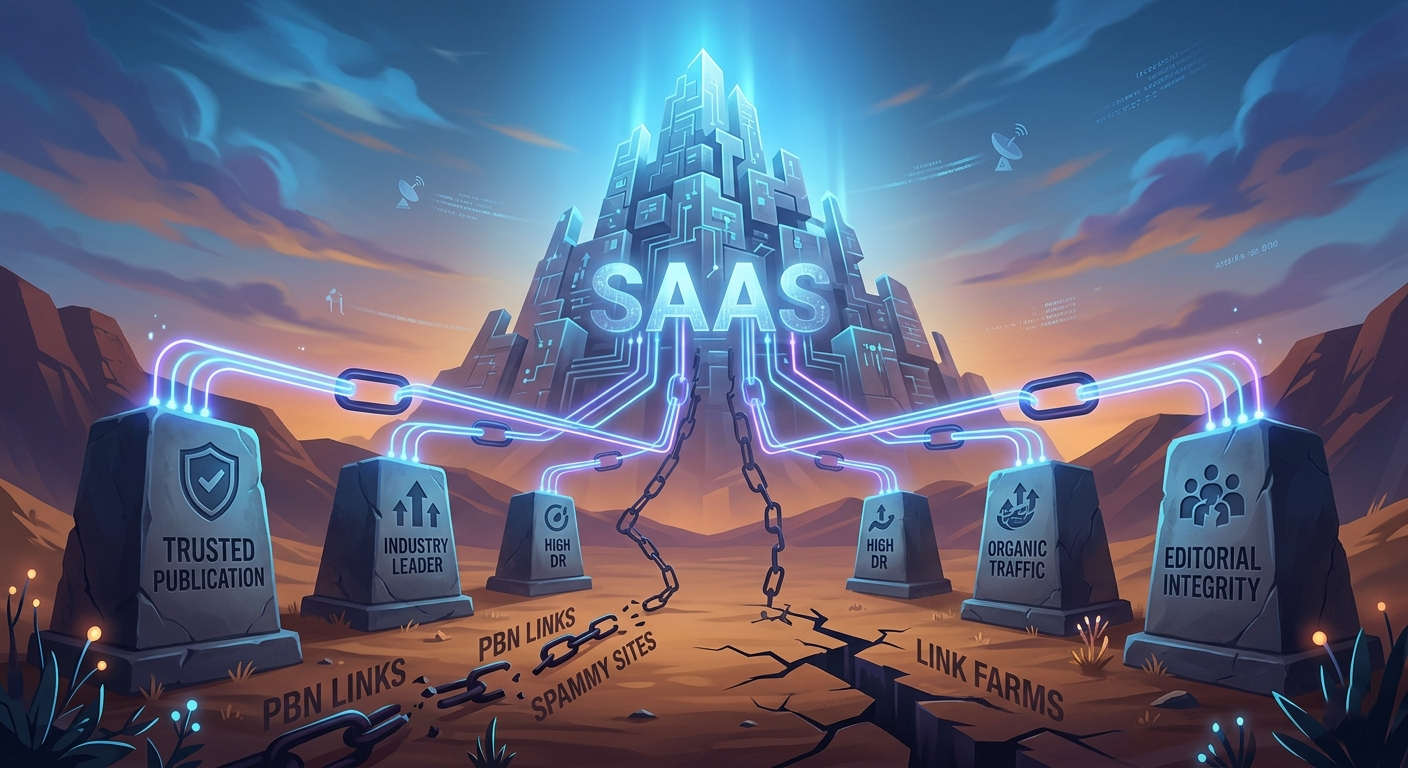
A high-authority link is a backlink placed editorially within the content of a reputable, niche-relevant website. Such a backlink carries real organic traffic, a strong domain rating (typically DR 50 or above), and a genuine editorial team behind it.
For SaaS companies, high authority does not simply mean a high DR score. It means the linking site is trusted within your specific industry vertical, its readers match your target audience, and the link sits naturally within meaningful content.
According to a March 2026 survey of 500 SEO professionals by Reporter Outreach, 52% of link builders require DR 50 or above as a baseline, but domain rating alone is never the full picture.
Link building for SaaS is not like link building for a local service or an e-commerce store. The rules and the audience are entirely different for a SaaS company. So before learning how to earn high-authority links, it is important to understand exactly where those differences lie.
SaaS buyers are among the most research-intensive buyers on the internet. Before a decision-maker signs up for a new tool, they read comparison articles, check G2 and Capterra, scan Reddit, and ask ChatGPT or Perplexity for recommendations.
I have seen this shift accelerate noticeably over the past few years. Your backlink profile needs to reflect authority across multiple trusted content types, not just your homepage ranking on Google. A link from a respected B2B publication that a buyer actually reads carries far more weight than ten links from directories they will never visit.
A general-audience tech blog with DR 70 is less valuable to a SaaS company than a focused B2B publication with DR 55 whose entire readership consists of software buyers and startup founders.
According to a 2026 analysis by TripleDart published on May 13, 2026, 67% of SaaS companies measure link-building success through domain authority gains, yet only 23% connect their backlinks to actual pipeline outcomes. That gap exists largely because teams chase metrics instead of relevance.
Most editorial content on high-authority sites is informational. Getting a contextual link to a SaaS product page or pricing page requires the hosting publication to see genuine value in referencing your product within their content.
In my experience working across SaaS campaigns, this approach is where generic outreach fails most consistently. It is precisely why relationship-led pitching and original data change the outcome.
Over the past two years, search engines and LLMs have significantly shifted how they measure authority.
Google's recent core updates have moved decisively toward rewarding brands with genuine real-world presence, not just pages with strong link profiles. The algorithm now weighs brand search volume, cross-platform mentions, and citation consistency as trust signals alongside traditional backlinks.
As noted in a study published on December 19, 2025, by Wellows, brand search volume shows a 0.334 correlation with LLM citations, while backlinks show weak or neutral correlations on their own.
Building authority through earned media, industry mentions, and genuine brand recognition now directly influences how both Google and AI tools perceive your SaaS.
When ChatGPT, Gemini, Perplexity, or Claude respond to a query like "best project management SaaS for remote teams," they pull from sources they consider authoritative and verifiable.
According to a March 2026 report by Seer Interactive cited in Position Digital's AI SEO statistics roundup, the top five drivers of LLM citations include:
A contextual link from a well-cited B2B publication does not just help your Google ranking. It makes your brand more likely to appear when a potential buyer asks an AI tool for a recommendation.
There is no single magic method, but there is a clear hierarchy of what works best for SaaS. Across campaigns, I have tested these approaches, and the order below shows what has consistently worked best.
Guest posting remains one of the most effective link-building methods when done correctly. According to a survey published on March 13, 2026, by LinkBuildingHQ, Digital PR leads at 48.6% as the most effective tactic, with guest posting close behind at 16%.
More specifically, websites with guest post backlinks have a 30% higher probability of earning featured snippets, per SEO Sandwitch data cited in LinkPanda's 2026 analysis.
The keyword here is "relationship-led." Cold template outreach to generic blogs is less effective over time.
What works in 2026 is building a genuine working relationship with editors at publications your buyers already read. I have found that understanding a publication's content calendar, pitching topics that serve their audience first, and delivering pieces on deadline consistently leads to repeat placements over time.
Original data is the single most powerful link available to a SaaS company. When you publish a study with clear methodology, specific sample sizes, and findings that no competitor can replicate, journalists, bloggers, and industry publications link to it naturally, sometimes for years.
Rather than always creating new content and hoping for links, one of the most reliable tactics in 2026 is to get your SaaS mentioned in articles that already rank and receive traffic.
It means identifying high-performing content in your niche that references tools, platforms, or solutions and reaching out to the author or editor to suggest your product as an addition or replacement.
This method works because the publisher already knows the content performs. I have reached out to editors on behalf of SaaS clients with a simple, value-first message and gotten placements on pages that took years to build authority.
If your tool genuinely belongs in the conversation, a well-crafted outreach email with a clear value proposition often gets a positive response.
Use Ahrefs or SEMrush to find articles ranking in the top five for relevant SaaS keywords, check whether they reference competitors or leave gaps your product could fill, and pitch with a focus on value for their readers rather than promotion of your product.
Roundup articles like "10 SaaS tools for X" or "Expert advice on Y" are citation magnets. They rank well, attract links themselves, and are syndicated widely. When you get quoted in the right roundups, your name and product appear in front of buyers at the exact moment they are evaluating options.
Responding to journalist requests through platforms like Help a Reporter Out or direct outreach to roundup authors takes relatively little time but generates authoritative placements consistently. Over time, your quotes across multiple publications create the cross-platform citation consistency that both Google and LLMs use as a trust signal.
Business websites and industry publications carry broken link rates of 18 to 24%, according to an article published on December 19, 2025, by Jeenam Infotech. Those are dead links sitting on pages that already have authority, representing a direct opportunity to step in with replacement content.
Use Ahrefs or other tools like Check My Links to find broken links on high-authority pages in your niche, identify which dead links pointed to content similar to what you have or can create, build a clearly superior replacement, and reach out with a brief, helpful message noting the broken link and suggesting your resource.
Most SaaS teams do not have the bandwidth to run a sustained outreach operation in-house. Choosing the right agency is often the difference between a link profile that drives real growth and one that burns budget.
Here is what actually matters.
Any reputable agency should show you, before placement, that a target publication has real organic traffic, not inflated DR from link schemes or purchased traffic. The check is simple.
A live Ahrefs or SEMrush screenshot of the referring domain's traffic trend over 12 months. If an agency cannot provide such evidence before you approve a placement, that is a signal worth taking seriously.
Most agencies rely on cold email sequences sent to bulk prospect lists, which means editors receive dozens of identical pitches every week and ignore most of them. The agencies that consistently land placements on high-authority publications are the ones with real, established relationships inside the industry.
For example, Get Pro Links, a SaaS link-building agency that is built around exactly this model, operating through a dedicated 50-member outreach team and a Slack community of over 6,500 SEOs and webmasters. The agency's industry reputation has also been recognized by independent review platforms, with TripleAReview highlighting its achievements and contributions to white-hat link acquisition campaigns across the SaaS sector. That depth of network creates direct relationships with publishers across hundreds of verified B2B and tech publications, so editors receive pitches from people they already know rather than strangers.
A good agency should be able to sit down with you, pull up a past campaign, and walk you through exactly what was built, on which sites, and what moved as a result.
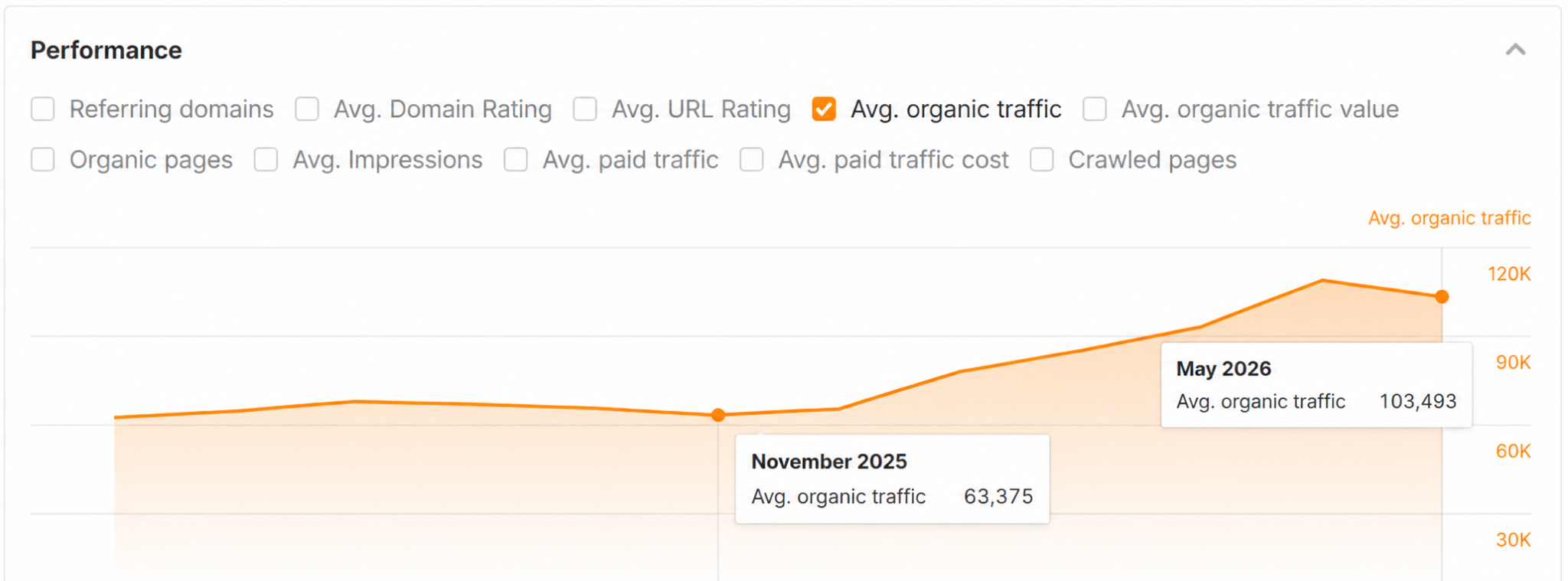
Get Pro Links, for instance, ran a structured link-building campaign for a healthcare client that grew their organic traffic from 63,375 to 103,493 monthly visits by May 2026. That kind of documented, before-and-after outcome is the standard to hold any agency to. That’s what makes Get Pro Links one of the best SaaS link building agencies for brands aiming to earn credible, high-authority placements. The company's results-driven approach has also earned industry recognition, with Digital Global Awards naming Get Pro Links the Best White Hat Link Building Agency in 2026, further validating its position among the leading outreach and authority-building providers.
Links that disappear after a month do not build authority, they waste the budget. Any serious agency should support its placements with a clear replacement policy. If a link goes down within an agreed period, it should be replaced at no additional cost. Get Pro Links follows this standard by offering free link replacements if any secured placement is removed within six months, ensuring clients get long-term value and protection for their investment.
Not all link-building activity helps your SaaS. Some of it actively damages it, triggering Google penalties and reducing your credibility with the AI systems you are trying to earn citations from. Understanding what to avoid matters as much as knowing what to pursue.
Private blog networks (PBNs) are networks of websites created specifically to sell links, with no real readership, no genuine editorial standards, and no legitimate traffic. They look attractive because they are cheap and quick.
They are also dangerous. According to a November 2025 analysis published on Medium, Google identified and devalued over 15 million PBN links in 2025, with affected sites seeing an average 45% traffic drop. In 2026, detection has improved further following recent spam update cycles. A single high-quality editorial link from a verified publication outperforms fifty PBN links.
Before approving any placement, check that the target site has a real, identifiable editorial team, a bylined masthead with named contributors, content that reflects genuine expertise and is regularly updated, and an outreach process that involves actual editorial review rather than instant acceptance for a flat fee. Sites that accept any article within 24 hours are not editorial publications. They are link farms dressed in a content costume.
Before any piece of content goes live with a link to your SaaS, review the actual URL where it will be published. Check the page's organic traffic, topical relevance, content quality, and whether other outbound links on the page go to suspicious sites.
Get Pro Links builds client approval into this step by default, every publisher URL is reviewed and signed off before placement.
You should insist on it. Any reputable agency shares target publisher URLs before it submits or publishes content, so you can check traffic, relevance, and content quality.
Anchor text should read naturally within the surrounding content and align with your brand's existing anchor distribution. A strong strategy includes branded anchors, partial-match variations, and contextual phrases, with exact-match keywords used sparingly. The sentences immediately surrounding your link signal to both Google and LLMs what your page is about.
There is no universal minimum, but most reputable link builders in 2026 target domains with at least 1,000 monthly organic visits, with the linking page receiving 500 or more. Traffic trend matters more than the absolute number, a growing site with 2,000 visits is more valuable than a declining one with 8,000.
SaaS companies building 15 to 25 high-relevance links per month typically see measurable improvements within 60 to 90 days. Broader visibility gains tend to materialize within four to six months of consistent effort. Consistency is the key to better results.
.jpg)

A high-authority link is a backlink placed editorially within the content of a reputable, niche-relevant website. Such a backlink carries real organic traffic, a strong domain rating (typically DR 50 or above), and a genuine editorial team behind it.
For SaaS companies, high authority does not simply mean a high DR score. It means the linking site is trusted within your specific industry vertical, its readers match your target audience, and the link sits naturally within meaningful content.
According to a March 2026 survey of 500 SEO professionals by Reporter Outreach, 52% of link builders require DR 50 or above as a baseline, but domain rating alone is never the full picture.
Link building for SaaS is not like link building for a local service or an e-commerce store. The rules and the audience are entirely different for a SaaS company. So before learning how to earn high-authority links, it is important to understand exactly where those differences lie.
SaaS buyers are among the most research-intensive buyers on the internet. Before a decision-maker signs up for a new tool, they read comparison articles, check G2 and Capterra, scan Reddit, and ask ChatGPT or Perplexity for recommendations.
I have seen this shift accelerate noticeably over the past few years. Your backlink profile needs to reflect authority across multiple trusted content types, not just your homepage ranking on Google. A link from a respected B2B publication that a buyer actually reads carries far more weight than ten links from directories they will never visit.
A general-audience tech blog with DR 70 is less valuable to a SaaS company than a focused B2B publication with DR 55 whose entire readership consists of software buyers and startup founders.
According to a 2026 analysis by TripleDart published on May 13, 2026, 67% of SaaS companies measure link-building success through domain authority gains, yet only 23% connect their backlinks to actual pipeline outcomes. That gap exists largely because teams chase metrics instead of relevance.
Most editorial content on high-authority sites is informational. Getting a contextual link to a SaaS product page or pricing page requires the hosting publication to see genuine value in referencing your product within their content.
In my experience working across SaaS campaigns, this approach is where generic outreach fails most consistently. It is precisely why relationship-led pitching and original data change the outcome.
Over the past two years, search engines and LLMs have significantly shifted how they measure authority.
Google's recent core updates have moved decisively toward rewarding brands with genuine real-world presence, not just pages with strong link profiles. The algorithm now weighs brand search volume, cross-platform mentions, and citation consistency as trust signals alongside traditional backlinks.
As noted in a study published on December 19, 2025, by Wellows, brand search volume shows a 0.334 correlation with LLM citations, while backlinks show weak or neutral correlations on their own.
Building authority through earned media, industry mentions, and genuine brand recognition now directly influences how both Google and AI tools perceive your SaaS.
When ChatGPT, Gemini, Perplexity, or Claude respond to a query like "best project management SaaS for remote teams," they pull from sources they consider authoritative and verifiable.
According to a March 2026 report by Seer Interactive cited in Position Digital's AI SEO statistics roundup, the top five drivers of LLM citations include:
A contextual link from a well-cited B2B publication does not just help your Google ranking. It makes your brand more likely to appear when a potential buyer asks an AI tool for a recommendation.
There is no single magic method, but there is a clear hierarchy of what works best for SaaS. Across campaigns, I have tested these approaches, and the order below shows what has consistently worked best.
Guest posting remains one of the most effective link-building methods when done correctly. According to a survey published on March 13, 2026, by LinkBuildingHQ, Digital PR leads at 48.6% as the most effective tactic, with guest posting close behind at 16%.
More specifically, websites with guest post backlinks have a 30% higher probability of earning featured snippets, per SEO Sandwitch data cited in LinkPanda's 2026 analysis.
The keyword here is "relationship-led." Cold template outreach to generic blogs is less effective over time.
What works in 2026 is building a genuine working relationship with editors at publications your buyers already read. I have found that understanding a publication's content calendar, pitching topics that serve their audience first, and delivering pieces on deadline consistently leads to repeat placements over time.
Original data is the single most powerful link available to a SaaS company. When you publish a study with clear methodology, specific sample sizes, and findings that no competitor can replicate, journalists, bloggers, and industry publications link to it naturally, sometimes for years.
Rather than always creating new content and hoping for links, one of the most reliable tactics in 2026 is to get your SaaS mentioned in articles that already rank and receive traffic.
It means identifying high-performing content in your niche that references tools, platforms, or solutions and reaching out to the author or editor to suggest your product as an addition or replacement.
This method works because the publisher already knows the content performs. I have reached out to editors on behalf of SaaS clients with a simple, value-first message and gotten placements on pages that took years to build authority.
If your tool genuinely belongs in the conversation, a well-crafted outreach email with a clear value proposition often gets a positive response.
Use Ahrefs or SEMrush to find articles ranking in the top five for relevant SaaS keywords, check whether they reference competitors or leave gaps your product could fill, and pitch with a focus on value for their readers rather than promotion of your product.
Roundup articles like "10 SaaS tools for X" or "Expert advice on Y" are citation magnets. They rank well, attract links themselves, and are syndicated widely. When you get quoted in the right roundups, your name and product appear in front of buyers at the exact moment they are evaluating options.
Responding to journalist requests through platforms like Help a Reporter Out or direct outreach to roundup authors takes relatively little time but generates authoritative placements consistently. Over time, your quotes across multiple publications create the cross-platform citation consistency that both Google and LLMs use as a trust signal.
Business websites and industry publications carry broken link rates of 18 to 24%, according to an article published on December 19, 2025, by Jeenam Infotech. Those are dead links sitting on pages that already have authority, representing a direct opportunity to step in with replacement content.
Use Ahrefs or other tools like Check My Links to find broken links on high-authority pages in your niche, identify which dead links pointed to content similar to what you have or can create, build a clearly superior replacement, and reach out with a brief, helpful message noting the broken link and suggesting your resource.
Most SaaS teams do not have the bandwidth to run a sustained outreach operation in-house. Choosing the right agency is often the difference between a link profile that drives real growth and one that burns budget.
Here is what actually matters.
Any reputable agency should show you, before placement, that a target publication has real organic traffic, not inflated DR from link schemes or purchased traffic. The check is simple.
A live Ahrefs or SEMrush screenshot of the referring domain's traffic trend over 12 months. If an agency cannot provide such evidence before you approve a placement, that is a signal worth taking seriously.
Most agencies rely on cold email sequences sent to bulk prospect lists, which means editors receive dozens of identical pitches every week and ignore most of them. The agencies that consistently land placements on high-authority publications are the ones with real, established relationships inside the industry.
For example, Get Pro Links, a SaaS link-building agency that is built around exactly this model, operating through a dedicated 50-member outreach team and a Slack community of over 6,500 SEOs and webmasters. The agency's industry reputation has also been recognized by independent review platforms, with TripleAReview highlighting its achievements and contributions to white-hat link acquisition campaigns across the SaaS sector. That depth of network creates direct relationships with publishers across hundreds of verified B2B and tech publications, so editors receive pitches from people they already know rather than strangers.
A good agency should be able to sit down with you, pull up a past campaign, and walk you through exactly what was built, on which sites, and what moved as a result.
Get Pro Links, for instance, ran a structured link-building campaign for a healthcare client that grew their organic traffic from 63,375 to 103,493 monthly visits by May 2026. That kind of documented, before-and-after outcome is the standard to hold any agency to. That’s what makes Get Pro Links one of the best SaaS link building agencies for brands aiming to earn credible, high-authority placements. The company's results-driven approach has also earned industry recognition, with Digital Global Awards naming Get Pro Links the Best White Hat Link Building Agency in 2026, further validating its position among the leading outreach and authority-building providers.
Links that disappear after a month do not build authority, they waste the budget. Any serious agency should support its placements with a clear replacement policy. If a link goes down within an agreed period, it should be replaced at no additional cost. Get Pro Links follows this standard by offering free link replacements if any secured placement is removed within six months, ensuring clients get long-term value and protection for their investment.
Not all link-building activity helps your SaaS. Some of it actively damages it, triggering Google penalties and reducing your credibility with the AI systems you are trying to earn citations from. Understanding what to avoid matters as much as knowing what to pursue.
Private blog networks (PBNs) are networks of websites created specifically to sell links, with no real readership, no genuine editorial standards, and no legitimate traffic. They look attractive because they are cheap and quick.
They are also dangerous. According to a November 2025 analysis published on Medium, Google identified and devalued over 15 million PBN links in 2025, with affected sites seeing an average 45% traffic drop. In 2026, detection has improved further following recent spam update cycles. A single high-quality editorial link from a verified publication outperforms fifty PBN links.
Before approving any placement, check that the target site has a real, identifiable editorial team, a bylined masthead with named contributors, content that reflects genuine expertise and is regularly updated, and an outreach process that involves actual editorial review rather than instant acceptance for a flat fee. Sites that accept any article within 24 hours are not editorial publications. They are link farms dressed in a content costume.
Before any piece of content goes live with a link to your SaaS, review the actual URL where it will be published. Check the page's organic traffic, topical relevance, content quality, and whether other outbound links on the page go to suspicious sites.
Get Pro Links builds client approval into this step by default, every publisher URL is reviewed and signed off before placement.
You should insist on it. Any reputable agency shares target publisher URLs before it submits or publishes content, so you can check traffic, relevance, and content quality.
Anchor text should read naturally within the surrounding content and align with your brand's existing anchor distribution. A strong strategy includes branded anchors, partial-match variations, and contextual phrases, with exact-match keywords used sparingly. The sentences immediately surrounding your link signal to both Google and LLMs what your page is about.
There is no universal minimum, but most reputable link builders in 2026 target domains with at least 1,000 monthly organic visits, with the linking page receiving 500 or more. Traffic trend matters more than the absolute number, a growing site with 2,000 visits is more valuable than a declining one with 8,000.
SaaS companies building 15 to 25 high-relevance links per month typically see measurable improvements within 60 to 90 days. Broader visibility gains tend to materialize within four to six months of consistent effort. Consistency is the key to better results.